Fun Dance Workouts for People Who Hate the Gym
Quick Answer: Dance workouts work for gym-haters because they’re genuinely fun, which is what makes you keep doing them. Start at home with a follow-along video — no equipment, no experience, nobody watching. Pick music you actually love, let go of getting the steps right, and aim for two or three 20–30 minute sessions a week. Consistency is what delivers results, and fun is what delivers consistency.
If the thought of a gym fills you with a specific kind of dread — the machines, the mirrors, the sense that everyone else got a manual you didn’t — dance workouts might genuinely change your relationship with exercise.
No equipment to figure out. No intimidating machines. Nobody watching.
Just you, music you like, and movement that doesn’t feel like a chore.

Do dance workouts actually count as exercise?
Yes, and by more measures than people expect.
Dance workouts are solid cardiovascular exercise — a moderate-intensity session burns in a similar range to a brisk jog, depending on the style and how hard you go. They build coordination, balance and muscular endurance, and the mood effect is real: rhythmic movement to music you enjoy reliably lifts how you feel afterward.
But the biggest advantage is the boring one. When exercise is fun, you keep doing it — and consistency, not intensity, is what produces results over months. Dance turns “having to work out” into “getting to dance,” which changes the entire adherence problem.

How do you start dance workouts at home?
Your living room is a perfectly good studio.
Find a follow-along video. There are thousands, from gentle beginner routines to high-energy cardio dance. Start with something labeled beginner, even if you think you don’t need it — the first session is about learning the instructor’s cues, not proving anything.
Clear about six feet of space. That’s genuinely enough for most routines.
Wear shoes with a bit of support, or go barefoot on carpet. Slippery socks on hardwood is the one genuine injury risk here.
Start with 20 minutes. Two or three sessions a week. You can extend once it stops feeling like a lot.
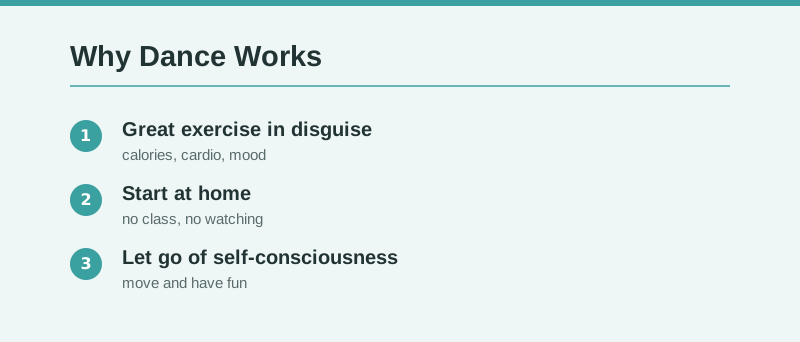
There’s no coordination requirement and absolutely no one watching, which means you can flail, laugh and get it wrong without a shred of self-consciousness. Press play and move — the fun handles the rest.
How do you stop feeling silly?
Worrying about looking ridiculous is the single biggest barrier to enjoying this, so let’s dispose of it.
Nobody is judging you — certainly not at home, and honestly not in a class either, where everyone is busy watching the instructor. The goal isn’t accurate choreography. It’s moving your body for 25 minutes to music you like.
The more you stop trying to get every step right, the better the workout gets, because you move bigger and stop pausing to correct yourself. Getting it wrong at full commitment burns more calories than getting it right at half speed.
Embrace the joyful mess. That’s where the whole thing works.
Why does the music matter so much?
More than the choreography, honestly.
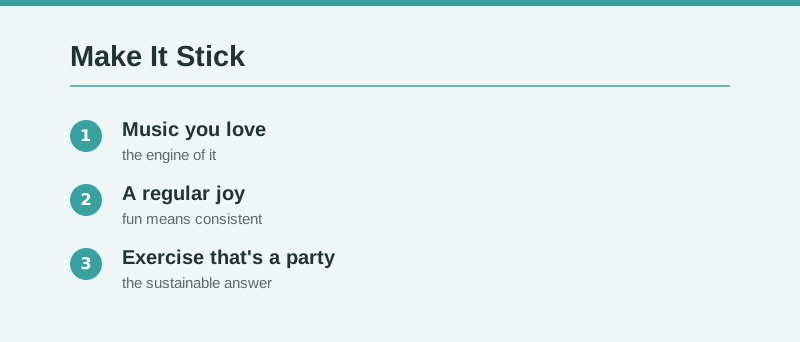
The right music turns a dance workout from exercise into something closer to a party. Choose routines set to music you genuinely love — whatever actually makes you want to move — and the session becomes something you look forward to instead of something you schedule and dread.
Music is the engine. When the song is good, you’ll dance longer and harder without particularly noticing the effort, which is the closest thing to a free lunch that exercise offers.
Practical tip: if you love a workout’s moves but hate its playlist, mute it and play your own. The routine still works.

Myth vs Fact: dance workouts
Myth: You need rhythm to do a dance workout. Fact: You need the ability to move for 25 minutes. Beginner routines are built around repetitive, simple patterns, and being slightly off the beat has no effect on the cardiovascular benefit whatsoever.
Myth: Dance workouts are easy, so they don’t count as real exercise. Fact: A moderate-intensity dance session sits in a similar effort range to a brisk jog. It feels easier because it’s enjoyable, which is a psychological difference, not a physiological one.
Myth: You need a class to do it properly. Fact: Home follow-alongs are how most people start and how many people continue. Classes add social energy and an instructor’s eye, but neither is required to get the benefit.
Myth: It’s cardio only, so it won’t build any strength. Fact: Dance involves plenty of squatting, lunging, jumping and single-leg balance work, which builds real lower-body endurance and stability. It won’t replace strength training, but it isn’t purely cardio either.
How do you make it stick?
Because dance workouts are actually enjoyable, they’re unusually easy to maintain — which is precisely what makes them effective.
- Schedule two or three sessions a week rather than aiming for daily. Sustainable beats ambitious.
- Keep a short list of favorites so you never lose ten minutes choosing a video.
- Pair it with something. Same time of day, or right after work, so it becomes a slot rather than a decision.
- Mix styles — Latin-inspired, hip-hop, barre-dance hybrids, 80s aerobics revivals. Variety keeps it interesting and works different movement patterns.
Over months, that consistency builds genuine fitness while feeling like enjoyment. For anyone who’s repeatedly failed to stick with a gym, a joyful dance habit may be the sustainable answer.
This is general wellness information, not medical advice. If you have joint issues, a heart condition, or you’re returning to exercise after a long break or an injury, check with your doctor before starting — and modify or stop if something hurts.
Frequently Asked Questions
Are dance workouts good for weight loss?
They’re effective cardiovascular exercise, and a moderate 30-minute session burns a meaningful number of calories. What makes them particularly useful for long-term results is adherence — people tend to keep doing dance workouts far longer than workouts they dislike.
Do you need any dance experience to start?
None. Beginner follow-along routines are built for people who have never danced, and the instructors break moves down step by step. Accuracy isn’t the goal — sustained movement is, and you get that from the first session.
How often should you do dance workouts?
Two or three sessions of 20–30 minutes a week is a solid starting point, and it’s enough to build noticeable cardiovascular fitness over a couple of months. Add more if you’re enjoying it, but consistency at a modest frequency beats an ambitious plan you abandon.
TL;DR:
- Dance workouts are real cardio — and their biggest advantage is that you’ll actually keep doing them
- Start at home with a beginner follow-along, six feet of space, and 20 minutes
- Wear supportive shoes or go barefoot on carpet; slippery socks on hardwood is the real risk
- Stop trying to get the steps right — full commitment to the wrong move beats half-hearted accuracy
- Pick music you love, aim for two or three sessions a week, and keep a short list of favorites
Keep Reading
This article is for general informational and styling purposes only. Fit, sizing, and product availability may vary.