Why Dance Cardio Feels Different on Carpet Than on Hard Floor
Quick Answer: Carpet grips the foot and stops rotation, so every pivot, turn, and slide either fails or twists the knee instead. It also absorbs energy, so jumps feel heavier and calves work harder for the same routine. Hard floors let you turn but punish landings and get slippery in socks. The practical fix is a small hard surface - a 1m by 1m board, an interlocking mat, or the kitchen floor - for anything with a pivot, and the carpet for anything with a jump.
If a routine you nailed at the studio disintegrates at home, the floor is a more likely culprit than your memory.
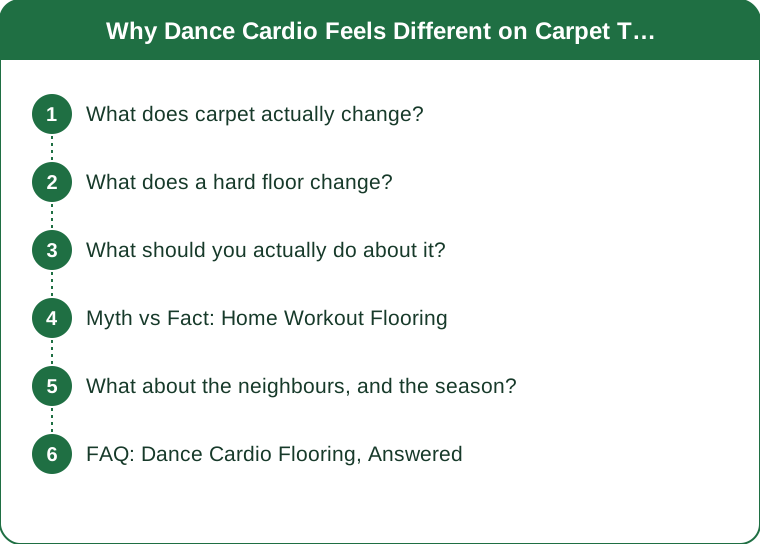
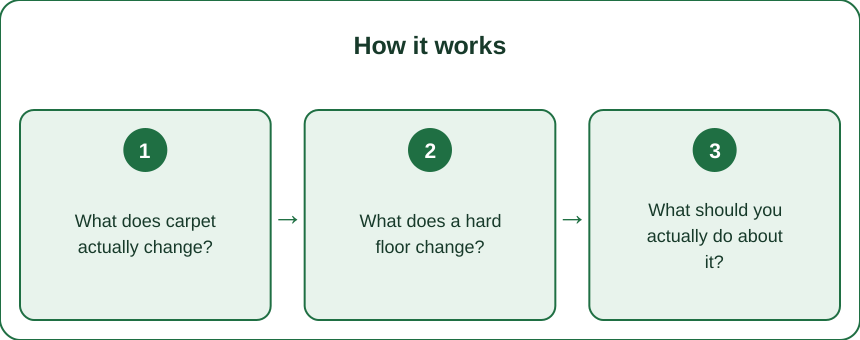
What does carpet actually change?
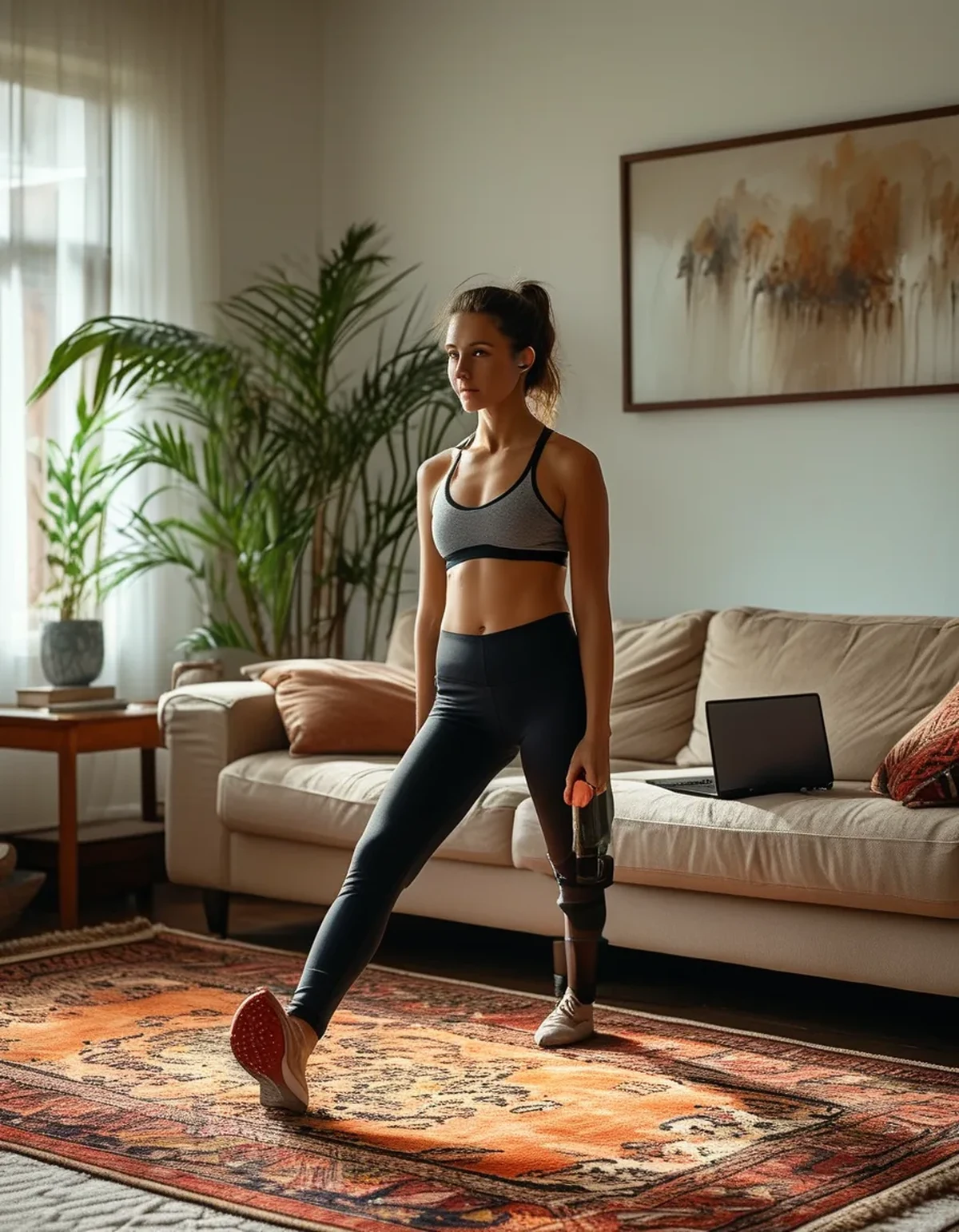
It stops rotation, and rotation is the foundation of most dance movement. A pivot needs the ball of the foot to turn against the floor. On carpet the shoe or sock grabs, the foot stays put, and the rotation has to happen somewhere - usually the knee.
That is the injury-relevant part. A foot that cannot rotate under a turning body transmits the rotation up the chain. It is the specific mechanism behind a lot of dance-related knee complaints, and it is worth taking seriously rather than pushing through.
It absorbs energy. Carpet and underlay compress on landing, which is good for impact and bad for anything that needs a rebound. Jumps feel heavy and travelling steps feel like wading.
Calves work considerably harder. Push-off from a soft surface loses energy into the surface, so the calves and feet do more work for the same movement. This is the most common source of unexpected next-day soreness after switching to a home workout.
Sliding steps become impossible. Anything with a glide, a chassé, or a slide requires a low-friction surface, and carpet supplies none.
And the sound cues change. A large share of learning choreography comes from hearing your own steps land in time. Carpet silences that, and timing quietly gets worse without an obvious cause.
What does a hard floor change?
It gives back your rotation, which fixes most of the choreography problems immediately.
It increases impact. Concrete under laminate is unforgiving, and repeated jumping on it loads shins, knees, and feet far more than a sprung studio floor. Studio floors are sprung specifically because dancers do this for hours.
Socks on hard floors are a genuine hazard. Too much slide, no control, and the classic outcome is a foot that keeps going. This is where grip socks earn their place, though grip socks then reintroduce the rotation problem - which is why bare feet or a low-profile trainer are usually better for dance than either extreme.
It is louder, which matters in a flat. Impact noise travels down through a building far more than airborne noise, and a jumping routine at 7am is a real problem for a downstairs neighbour.
Tile and stone are the worst of both. Hard, cold, unforgiving on landing, and slippery when your feet sweat.
Wood or laminate over a proper subfloor is the best common home surface, and adding a thin exercise mat under the high-impact section is a reasonable compromise.
What should you actually do about it?
Get a small hard surface rather than re-flooring anything. A 1m by 1m piece of plywood, a marley board, or two interlocking foam-backed hard tiles gives you a pivot surface for almost nothing. That is enough for most turning steps.
Split the routine by surface. Pivots and turns on the board, jumps and travelling on the carpet. This sounds fussy and takes one session to become automatic.
Or use the kitchen. Most home dancers already have a hard floor a few metres away and never think to use it.
Choose footwear for the surface, not out of habit. On carpet, a smooth-soled trainer or bare feet reduces the grabbing. On hard floors, a low-profile trainer with some grip, or a dance sneaker with a pivot point under the ball of the foot, which is exactly what that circle is for.
Modify rather than force. A pivot turn on carpet can become a step-around turn with no rotation through the foot. It looks nearly the same and does not load the knee.
And change your expectations of the routine. A class filmed in a sprung studio was choreographed for that surface. Some of what you see is not reproducible in a carpeted living room, and that is a property of the room rather than a failure of yours.
Myth vs Fact: Home Workout Flooring
Myth: carpet is safer because it is soft. Fact: softer for impact, considerably worse for rotation. The most common dance injuries are rotational rather than impact-related, so carpet trades a smaller risk for a larger one.
Myth: a yoga mat works as a dance surface. Fact: it is the highest-friction surface in the house and the worst possible thing to pivot on. Yoga mats are designed to stop your foot moving, which is precisely wrong here.
Myth: you need a sprung floor to train seriously. Fact: sprung floors matter for high-volume jumping. For 30 minutes of dance cardio a few times a week, a decent wood floor with sensible footwear is fine.
Myth: socks are fine on hard floors if you are careful. Fact: this is how most home workout falls happen. Bare feet or shoes; plain socks on laminate is not a controllable surface.
Myth: soreness after a home session means you worked harder. Fact: it often means your calves absorbed the energy the floor did not return. Different soreness, not better training.
Myth: the floor cannot affect timing. Fact: it can and does, because you learn partly through the sound of your own steps. Carpet removes that feedback entirely.
What about the neighbours, and the season?
Impact noise is the problem, not music. A downstairs neighbour hears the landing through the structure. Turning the music down does nothing about it.
A thick exercise mat under the jumping section is the most effective fix, more so than carpet, because a dense foam mat absorbs the impact rather than transmitting it.
Choose low-impact variations for early mornings and late evenings. Most dance cardio routines have a stepped alternative to every jump, and using it costs surprisingly little intensity.
Move the session away from the wall. Impact transmits worst near load-bearing walls and floor joists, and moving two metres into the middle of the room genuinely reduces what travels.
And autumn changes the setup in a way people miss. As it cools, windows close and rooms get smaller in practice - rugs come back down, furniture moves closer to radiators, and the two-by-two-metre space you danced in during August shrinks. Measure the space you actually have before starting a new routine, because a routine that travels needs floor and a routine that does not can be done in a metre square.
Cold rooms also need a longer warm-up. Dance cardio in a 16-degree living room in October needs several more minutes of gradual work than the same routine did in a warm room in July, and skipping it is where calf strains come from.
FAQ: Dance Cardio Flooring, Answered
Can I do dance cardio on carpet at all?
Yes, with modifications. Replace pivot turns with step-around turns, expect jumps to feel heavier, and accept that slides are not going to happen.
What is the cheapest way to get a pivot surface?
A square of plywood or hardboard from a DIY shop, or two hard-surface interlocking tiles. Both cost very little and both solve the rotation problem entirely.
Should I wear shoes for home dance workouts?
On hard floors, yes - a low-profile trainer or a dance sneaker. On carpet, smooth-soled shoes or bare feet reduce the grabbing. Never plain socks on a hard floor.
Why are my calves so sore after switching to home workouts?
Soft surfaces absorb push-off energy, so your calves supply more of it. It settles over a couple of weeks, and a short calf-focused warm-up helps meanwhile.
Does the floor really affect how fast I learn choreography?
Yes, partly through the sound of your own footfalls, which carpet removes. If you are struggling to stay on the beat at home but not in class, try a hard surface before assuming it is you.
TL;DR:
- Carpet stops rotation, so pivots either fail or send the twist into your knee - the injury-relevant part of this.
- Soft surfaces absorb push-off, which is why calves are unexpectedly sore after switching to home workouts.
- Hard floors restore rotation but increase impact, and plain socks on laminate is how home workout falls happen.
- The cheap fix is a 1m square of hard board for pivots, with the carpet for jumps.
- Yoga mats are the worst possible pivot surface - they are designed to stop your foot moving.
And as rooms close up for autumn, re-measure your space and lengthen your warm-up. A cold living room in October is a different training environment from the same room in July.
Keep Reading
This article is for general informational and styling purposes only. Fit, sizing, and product availability may vary.