Why a Routine You Nailed Last Week Falls Apart in a Different Room
Quick Answer: Movement memory is heavily context-dependent - it encodes not just the sequence but the visual landmarks, your position in the room, the mirror, and even the people beside you. Change the room and you lose the retrieval cues while keeping the movement, which feels exactly like forgetting. The fix is deliberate variation during practice, not more repetition in the same spot.
It is disorienting in a specific way. You know you know it. Your body starts each phrase correctly and then falls off a cliff halfway through, and the harder you try to recall it the worse it gets.
What is actually stored when you learn choreography?
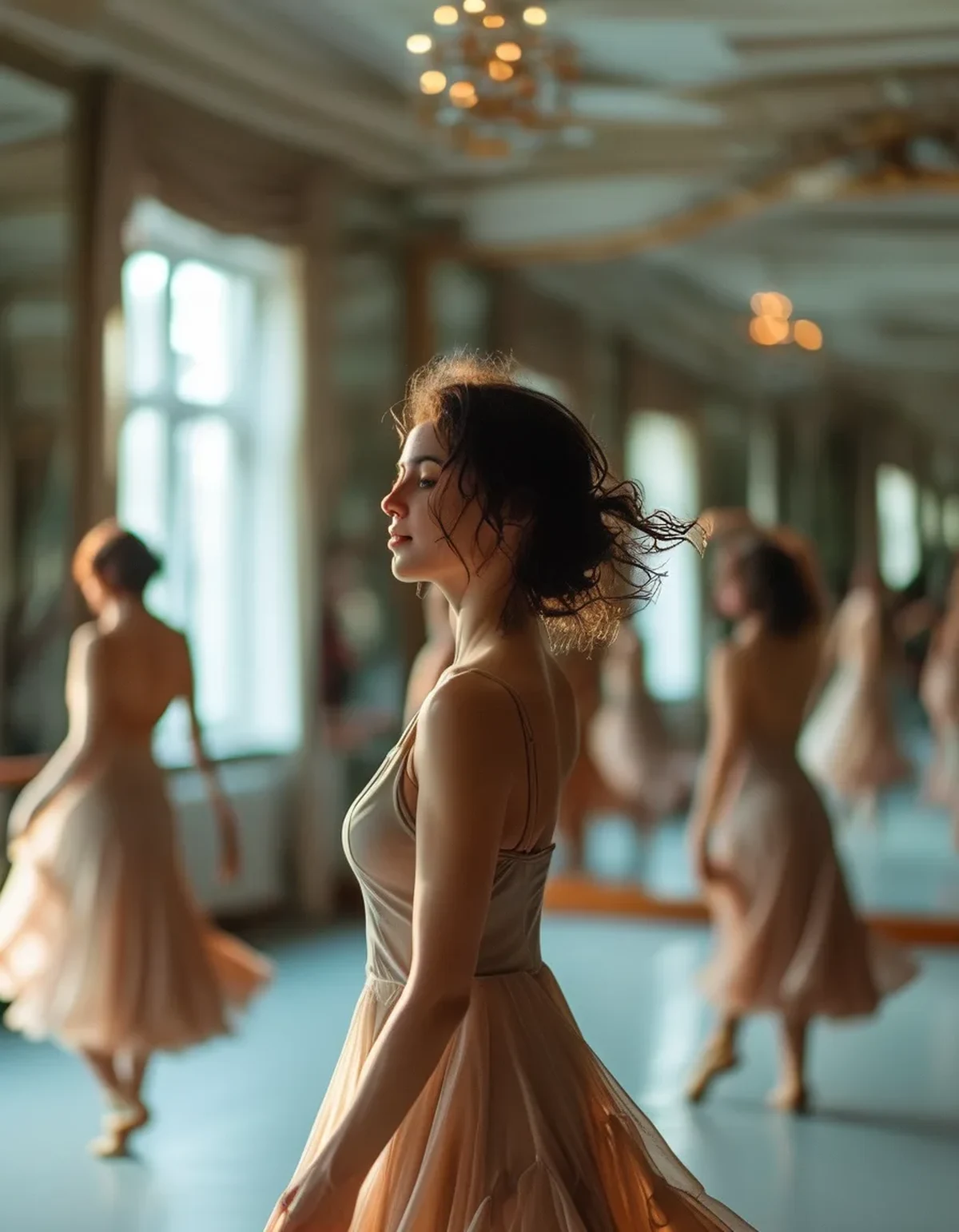
You encode the movement and the environment together. Motor learning research consistently shows context-dependent encoding - the surrounding cues get bound into the memory alongside the skill itself. The mirror position, the light from the window, the person to your left, the mark on the floor you turn at: all of it becomes part of the retrieval structure whether you intended it or not.
Spatial anchors do a lot of the work. Dancers navigate by room-relative landmarks far more than they realize. Turn to face the door, travel toward the barre - these are not instructions you consciously store, but they are what your body is using. Move to a room with the door on the other side and the anchors point the wrong way.
The mirror is a particularly heavy crutch. Learning with visual feedback means part of the correction loop is external. Remove the mirror and you lose ongoing confirmation, which increases cognitive load at exactly the moment you have less capacity available.
And other dancers are cues too. Peripheral vision picks up neighboring movement and uses it for timing. Standing in a different position in the group genuinely changes the difficulty of material you have already learned.
Why does trying harder make it worse?
Because well-learned movement is procedural, and conscious attention interferes with procedural execution. Once a sequence is automatic, it runs better without deliberate monitoring. The moment you start consciously retrieving what comes next, you shift from procedural to declarative processing and the fluency collapses.
This is the same mechanism behind choking in sport. Attention directed inward at execution disrupts a system that runs best on autopilot. It is why the phrase you can do perfectly while chatting becomes impossible the moment someone films you.
Anxiety narrows attention further. Under stress, peripheral awareness shrinks - which strips out exactly the environmental cues you were using to navigate the space. In a new room, already short of cues, that narrowing is costly.
The counterintuitive fix is to reduce effort and increase external focus. Look at where you are going rather than thinking about what you are doing. Focusing on an external target consistently outperforms focusing on your own body across a wide range of motor tasks.
And run the whole phrase rather than the part you lost. Starting from the beginning lets the procedural chain do its own retrieval. Trying to start from the middle - exactly where you fell off - is asking a system that runs sequentially to random-access, and it usually cannot.
5 Mistakes That Make Choreography Fragile
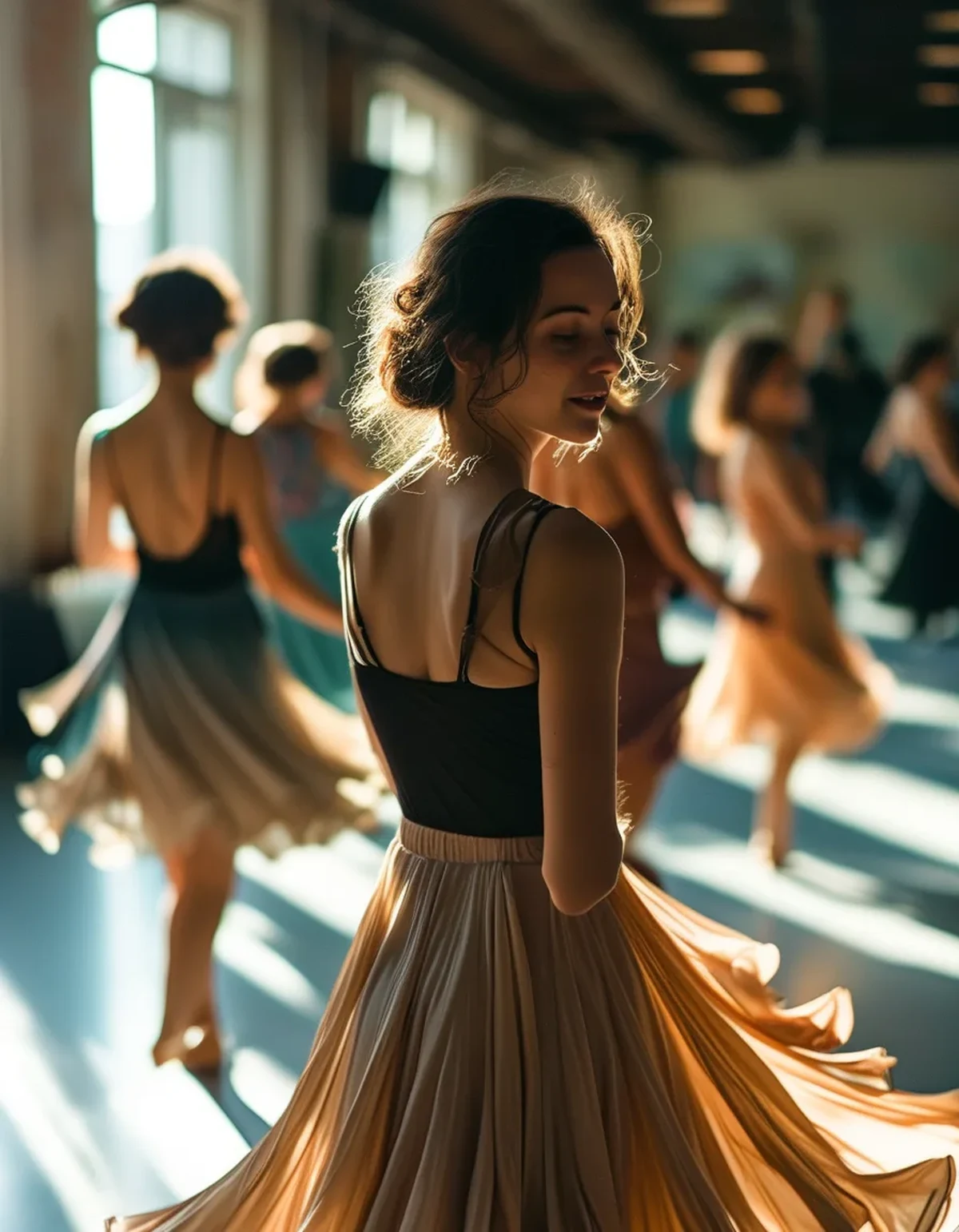
1. Always practicing in the same spot. The single biggest cause. If you always stand in the same place, you have learned the routine in that place. Deliberately move - front, back, corner, facing a different wall - during learning, not after.
2. Never practicing without the mirror. Turn away from it for at least a third of your practice. It will feel considerably worse and that discomfort is the actual learning.
3. Only ever practicing to the same music at the same volume. Tempo and audio environment are cues as well. Practicing at 90 percent speed and at full speed, loud and quiet, builds a memory that survives an unfamiliar sound system.
4. Massed repetition in one session. Twenty repetitions in one block feels productive and produces poor retention. The same twenty spread over four days produces far more durable learning. This is one of the most robust findings in motor learning and one of the most consistently ignored.
5. Practicing only when fresh. Performances happen at the end of a long day, in a warm room, with adrenaline. Occasionally running material when slightly tired builds a version of the memory that works under those conditions.
FAQ: Movement Memory Questions, Answered
How long does it take for choreography to become reliable in any space?
Most people need three to five practice contexts before a sequence transfers freely. That is not three to five repetitions - it is three to five genuinely different settings or positions. Once you have crossed that threshold, new spaces stop causing problems almost entirely.
Is it better to practice slowly or at full speed?
Both, in that order. Slow practice builds accuracy and lets you attend to detail; full speed builds the timing and rhythm that slow practice cannot. Practicing only slowly produces a routine that falls apart at tempo, and practicing only at tempo cements errors.
I can do it alone but not in the group. Why?
Mostly attentional load plus peripheral cue disruption. In a group you are tracking spacing, neighbors, and timing simultaneously, which consumes the capacity you were using for retrieval. Practice with distractions on purpose - a podcast playing, someone moving nearby - and the group version gets substantially easier.
TL;DR:
- Movement memory encodes the environment along with the sequence, so a new room removes your retrieval cues.
- Consciously trying to recall a well-learned phrase disrupts the procedural system that runs it.
- Practice in three to five different spots and orientations - variation beats repetition for transfer.
- Train without the mirror for a third of your practice, however bad it feels.
- Spread repetitions across days rather than massing them, and occasionally practice tired.
Keep Reading
This article is for general informational and styling purposes only. Fit, sizing, and product availability may vary.