Dance Workouts for Women Who Hate the Gym
Quick Answer: Dance workouts deliver real cardio — typically 300-500 calories an hour depending on intensity and body size — without a gym, equipment, or a commute. They work for gym-avoiders because enjoyment drives adherence, and the workout you actually do beats the optimal one you skip. Start with 20-minute follow-along videos at home, in a style of music you genuinely like.
The machines. The mirrors. The person doing something complicated with a kettlebell while you try to remember how the leg press works.
And the treadmill — twenty-two minutes of marching toward nothing, watching a number climb.
If that description makes your shoulders tense, here’s your permission slip: you don’t have to go back. There’s a form of cardio that people genuinely look forward to, and it happens in your living room.
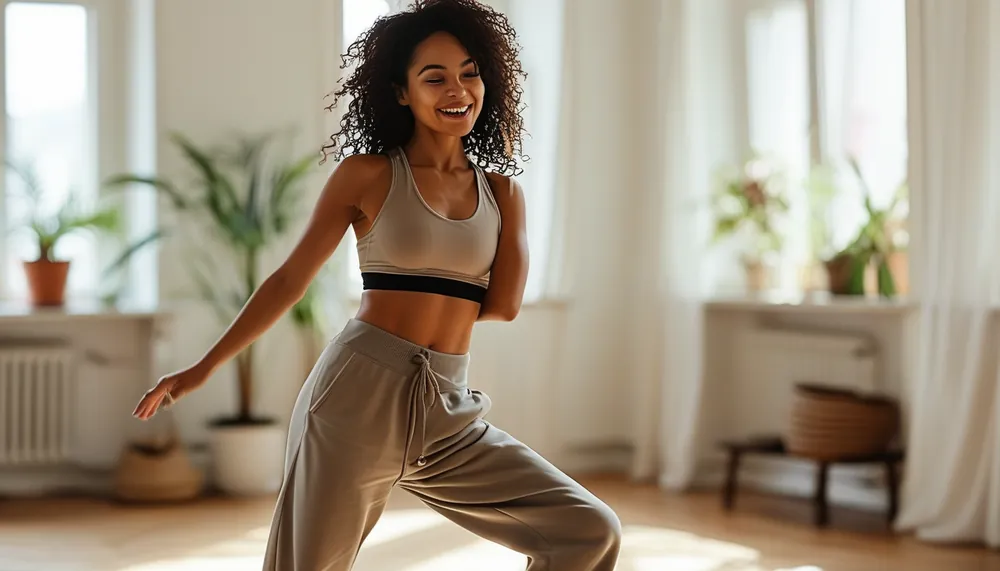
Does Dance Actually Count as a Real Workout?
Yes, and by a comfortable margin.
A moderate-intensity dance session burns roughly 300-400 calories an hour for most people, and a high-energy one can push toward 500 or beyond, depending on body size and how hard you go. That puts it squarely in the same territory as jogging or a spin class.
It also delivers things a treadmill doesn’t:
- Multi-directional movement. You step side to side, rotate, and change direction constantly. Running is one plane; dance is all of them.
- Coordination and balance training. Learning sequences is genuine coordination work, and there’s growing interest in the cognitive benefits of learning movement patterns as we age.
- Interval structure by default. Most choreography naturally alternates high-energy sections with lower ones — which is essentially interval training you didn’t have to plan.
The heart rate data doesn’t care that you were enjoying yourself.
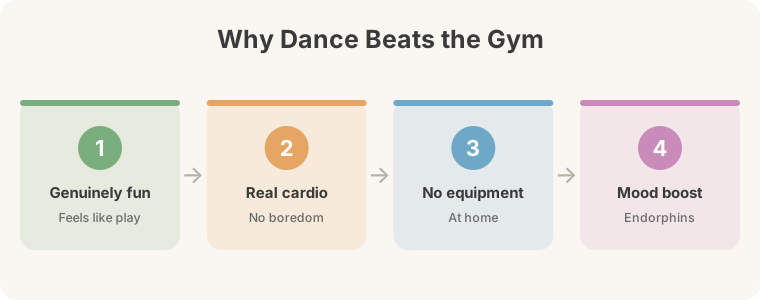
Why Does Dance Work for People Who Hate the Gym?
1. Enjoyment drives adherence
This is the actual mechanism, and it’s not a soft one. Exercise research consistently finds that enjoyment predicts long-term adherence better than almost any other factor. A moderately effective workout done three times a week for two years beats a perfect one abandoned in February.
2. The clock stops mattering
On a treadmill you watch the timer. In a dance workout you notice the song changed. Same 30 minutes, completely different experience of them.
3. Zero equipment, zero commute
Press play. That’s the whole setup. No membership, no bag to pack, no drive, no waiting for a machine. The barrier between “I should exercise” and “I am exercising” is about four seconds long.
4. It genuinely lifts your mood
Exercise and music each independently improve mood, and dance combines them. Most people finish a session in a better state than they started — which is not something anyone says about the leg press.
5. There’s no level to be at
You don’t need to be good. You need to move roughly in the direction the video is moving. Nobody is watching, and the fitness benefit doesn’t depend on your footwork being correct.

What Nobody Tells You About Dance Workouts
You’ll be terrible for the first three sessions, and then suddenly you won’t. The first time through any choreography is mostly confusion. By the third repeat of the same video, you know it — and that’s when it gets genuinely fun. Repeat videos rather than always finding new ones.
Your floor matters. Carpet grabs your feet and is rough on knees; hard floors are slippery in socks. Trainers with a smooth sole, or bare feet on a yoga mat, both work better than socks on laminate.
The music matters more than the instructor. If you don’t like the soundtrack, you won’t come back, regardless of how good the workout is. Search by genre — Latin, hip hop, 90s pop, Afrobeat, Bollywood — rather than by trainer.
20 minutes is a real workout. Two or three 20-minute sessions a week is a legitimate cardio habit. The hour-long-or-nothing framing is what stops most people starting.
Downstairs neighbours are a solvable problem. Low-impact dance workouts exist specifically for apartments — same choreography, no jumping. Search “low impact” and the thudding problem disappears.
How Do You Get Started?
- Search free videos by style and length. There’s an enormous amount available at no cost — start with 20-minute beginner sessions.
- Pick music you actually like. This is the highest-leverage decision. The fun is the point, and the fun is what makes it repeatable.
- Repeat the same video 3-4 times before moving on, so you get past the learning phase and into the enjoying phase.
- Clear a 6x6 foot space and check what’s within arm’s reach. Lamps have views about this.
- Don’t worry about getting it right. Marching in place while you figure out the arms is still cardio.
- Add strength separately. Dance is excellent cardio; it isn’t resistance training. Two short strength sessions a week alongside it covers what dance doesn’t.
Mini FAQ
How many calories does a dance workout burn?
Roughly 300-500 per hour for most people, depending on intensity, body size, and style. High-energy formats sit at the upper end; low-impact ones at the lower. As with all calorie estimates, treat the number as a rough guide rather than a measurement.
Do I need any dance experience?
None. Follow-along fitness videos are built for people with zero background, and they cue every move. Your form doesn’t need to be beautiful for your heart rate to rise.
How often should I do dance workouts?
Three to five sessions a week of 20-45 minutes covers standard cardio guidance comfortably. Start with three and add more if you’re enjoying it — which, given that enjoyment is the whole premise, you may well be.
TL;DR:
- Dance burns roughly 300-500 calories an hour and adds coordination and multi-directional movement that treadmills don’t.
- It works for gym-avoiders because enjoyment predicts adherence better than almost anything else.
- No equipment, no commute, no membership — the barrier to starting is about four seconds.
- Repeat the same video 3-4 times to get past the awkward learning phase.
- Pick by music genre, not by trainer, and add two short strength sessions a week alongside it.
This article is for general wellness purposes only and isn’t medical advice. Check with a doctor before starting a new exercise program if you have a heart condition, joint problems, or have been inactive for a long time.
Keep Reading
This article is for general informational and styling purposes only. Fit, sizing, and product availability may vary.