What to Wear to Dance Fitness (No Wardrobe Malfunctions)
Dance fitness is the workout that doesn’t feel like a workout — right up until your leggings start migrating south during a hip drop, your top flips up mid-shimmy, and you spend the last two songs tugging fabric instead of finding the beat.
The outfit is genuinely the difference between “living my best life” and “please let this song end.”
Quick Answer: High-waisted squat-proof leggings, a supportive sports bra, a fitted or tuckable top, and supportive trainers with moderate — not maximum — grip. The two rules that cover everything: nothing that slides (no low-rise), and nothing that sticks (no aggressive running-shoe tread that catches when you pivot). Skip cotton, which turns into a sweat sponge.
What Makes Dance Fitness Different From Other Workouts?
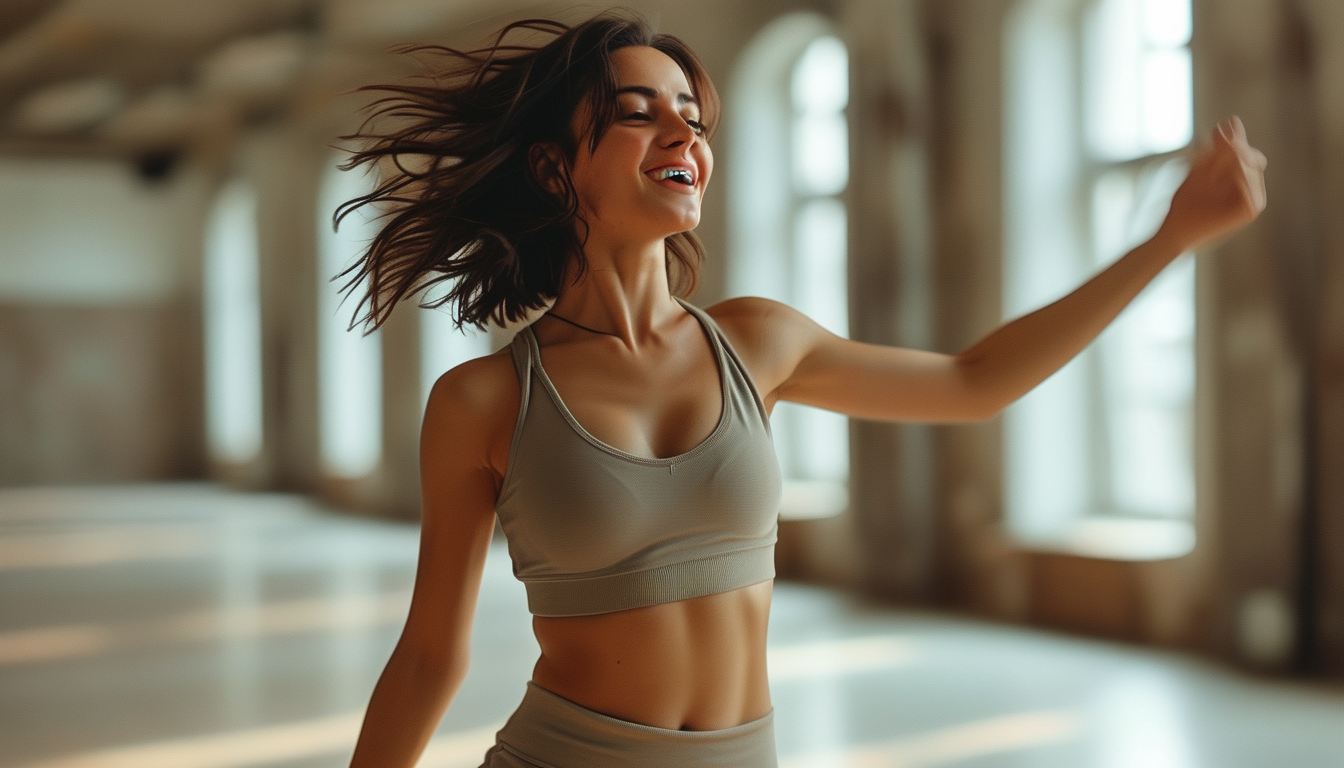
The direction of movement. That’s the whole thing.
Most workouts move in predictable planes. Running is forward. Lifting is mostly up and down. Dance fitness goes in every direction at once — jumping, twisting, shimmying, reaching overhead, dropping to the floor, rotating on one foot — and it does all of that at speed, to music, without warning you which is next.
Two consequences for your clothing:
Everything gets tested. A waistband that holds fine through squats will slide during a repeated hip isolation. A top that stays down in a plank will flip up when you reach both arms overhead and twist.
You can’t fix it mid-song. In a lifting session you adjust between sets. In a dance class there are no sets — there’s a continuous 45 minutes, and every adjustment pulls you out of the choreography.
So the standard isn’t “does this work?” It’s “does this work in every direction, without my thinking about it once?”
What Should You Wear to a Dance Fitness Class?
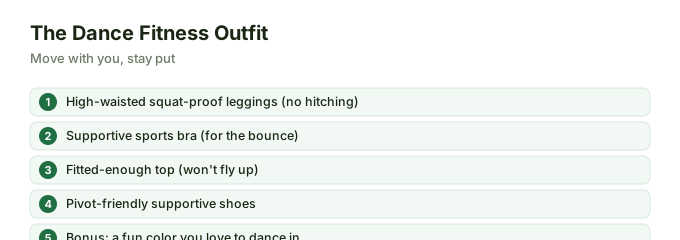
High-waisted leggings. The single most important piece. A high, wide waistband stays put through hip drops, floor work, and jumping. Low-rise and mid-rise will slide — not might, will. Make sure they’re squat-proof too, since dance classes involve plenty of deep bends and floor moves.
Full-length or capri both work. Capris are popular in warm studios.
A supportive sports bra. Dance fitness involves real jumping and bouncing, so this is a medium-to-high-impact situation, not a light-support one. Encapsulation styles (separate cups) generally handle multi-directional movement better than simple compression bras. If you’re between two, size toward the more supportive one.
A fitted or tuckable top. Flowy is genuinely fun and part of the appeal — just make sure it’s crop-length or tuckable so it can’t fly over your face during an overhead reach. A fitted tank under a loose top is a reliable compromise: you get the movement without the exposure risk.
Proper shoes. More on this below, because it’s the one people get wrong.
Layers you’ll actually shed. Dance fitness heats you up faster than almost any other class format. Whatever you wear in, plan to take it off in the first ten minutes.
The Shoe Problem Nobody Warns You About
Your running shoes are probably the wrong shoes.
This is counterintuitive, so here’s why. Running shoes are engineered for forward motion with maximum forward grip and cushioning under the heel. Dance fitness requires pivoting — turning on the ball of your foot while your body rotates.
A shoe with aggressive tread grips the floor and refuses to release during that pivot. Your foot stops. Your body keeps turning. That torque goes straight into your knee, and it’s one of the more common ways people get hurt in dance-based classes.
What you want instead:
- Moderate grip — enough not to slip, little enough to pivot.
- A smooth or pivot-point outsole, common in cross-trainers and shoes made for dance fitness.
- Lateral support, since you’re moving sideways constantly.
- Light weight.
Cross-trainers are the practical answer for most people. Dedicated dance fitness shoes exist and are better if you go regularly. Barefoot or socks is a slip hazard on a studio floor.
5 Mistakes Everyone Makes Dressing for Dance Fitness
1. Low-rise anything. It will slide. Every hip movement in the class is specifically engineered to make it slide.
2. Running shoes. Covered above — the pivot problem is a genuine injury risk, not a comfort preference.
3. Cotton. It absorbs sweat, gets heavy, stays wet, and chafes. Dance fitness produces far more sweat than newcomers expect, precisely because it’s fun enough that you don’t notice how hard you’re working. Moisture-wicking fabrics only.
4. Baggy tops. They ride up during overhead reaches and they hide your alignment from the instructor. Semi-fitted is the sweet spot — movement without malfunction.
5. Untested new gear on class day. New leggings and new shoes both need a trial run somewhere lower-stakes. Do a few squats and a few pivots at home before you find out mid-class.
Bonus: Dress for the Fun
Dance fitness is joyful in a way most workouts aren’t, so lean into it. A color or print you actually love genuinely makes you dance bigger — there’s no shame in dressing for the vibe, and confidence is a legitimate performance enhancer when the whole format runs on committing to the movement.
Practically speaking: back-row people tend to mirror front-row energy, and it’s hard to commit to a shimmy while thinking about your waistband. Solve the function first, then have fun with it.
FAQ
Can you wear running shoes to Zumba or dance fitness?
It’s not ideal. Running shoes have aggressive forward grip designed for straight-line motion, and that tread can catch during the pivots and turns dance fitness requires — which puts rotational stress on your knees. Cross-trainers or shoes made for dance fitness have smoother outsoles that let your foot rotate.
What should you wear to your first Zumba class?
High-waisted leggings or fitted joggers, a supportive sports bra, a fitted or tuckable top, and cross-trainers. Bring water and a small towel — most people are surprised by how much they sweat, because the format is enjoyable enough that you don’t register the effort until afterward.
Do you need special shoes for dance fitness?
Not immediately — cross-trainers you already own will work fine for your first several classes. If you end up going regularly, dedicated dance fitness shoes with pivot points on the sole are noticeably more comfortable for turns and are easier on your knees over time. The main thing to avoid in the meantime is high-grip running tread.
TL;DR:
- Dance fitness moves in every direction at speed, and you can’t adjust mid-song. Everything gets tested.
- High-waisted, squat-proof leggings. Low-rise will slide — guaranteed, not likely.
- Medium-to-high support sports bra. There’s real jumping involved.
- Fitted or tuckable top, or a fitted tank under something flowy.
- Not running shoes. Aggressive tread catches during pivots and torques your knees. Cross-trainers or dance fitness shoes.
- No cotton. You’ll sweat more than you expect because you won’t notice you’re working.
- Test new leggings and shoes at home first — squats and a few pivots.
See It in Motion
Seen here: Super High Waist Embossed Yoga Leggings with Inner Pocket — shop it on bubblelime.com
Keep Reading
This article is for general informational and styling purposes only. Fit, sizing, and product availability may vary.