You Can Still Get a Great Workout From Dance Fitness Without Ever Learning the Choreography
Quick Answer: The cardio benefit comes from continuous movement and an elevated heart rate — not from getting the steps right. If you march in place at the class’s tempo for the sections you can’t catch, you get essentially the same physiological workout as the person nailing every turn. Substitute a simple step whenever you lose the thread, match the tempo rather than the choreography, and stand at the back until you stop caring. Pattern recognition builds over weeks, not classes.
Thirty seconds into the second track you’re going left while everyone else goes right, and the instructor has already moved on to something involving arms.
Here’s the thing nobody mentions: your heart rate does not know you’re going the wrong way.
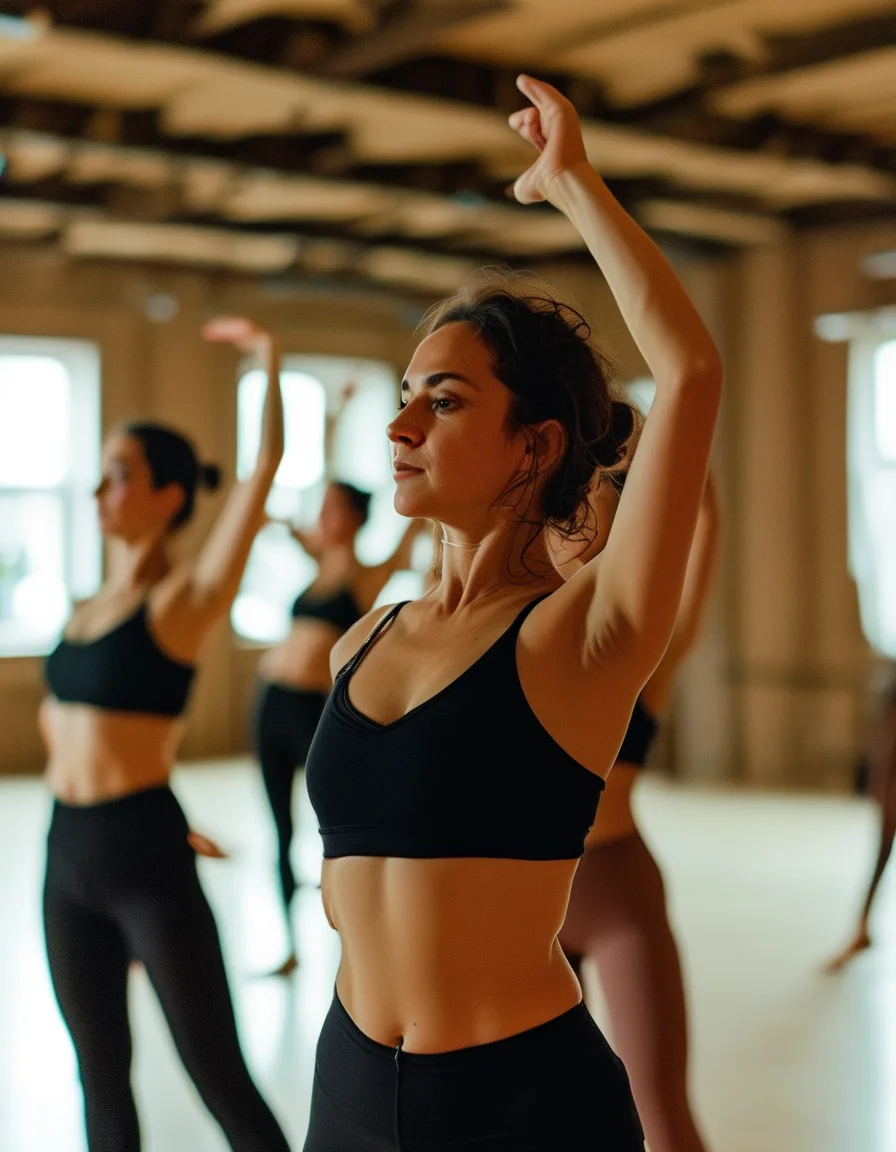
Does the Workout Actually Require Getting the Steps Right?
No — and the confusion here is between two genuinely separable things.
The training effect comes from continuous movement and heart rate. That’s the physiology. Your cardiovascular system responds to sustained work at a given intensity. It has no opinion about whether your grapevine went the correct direction, because that’s a coordination outcome, not a metabolic one.
A simplified substitute at similar intensity gives comparable benefit. March in place with real energy at the same tempo, and you’re producing similar continuous work to the full choreography. Not identical — the full version has more direction changes and more variety — but comparable in the way that matters for cardio.
The mix-up is performance vs. physiology. Dance fitness has a visual performance aspect and a training aspect. They’re related and they’re separable. People quit because they’re failing at the first one, without realizing the second one was working fine the whole time.
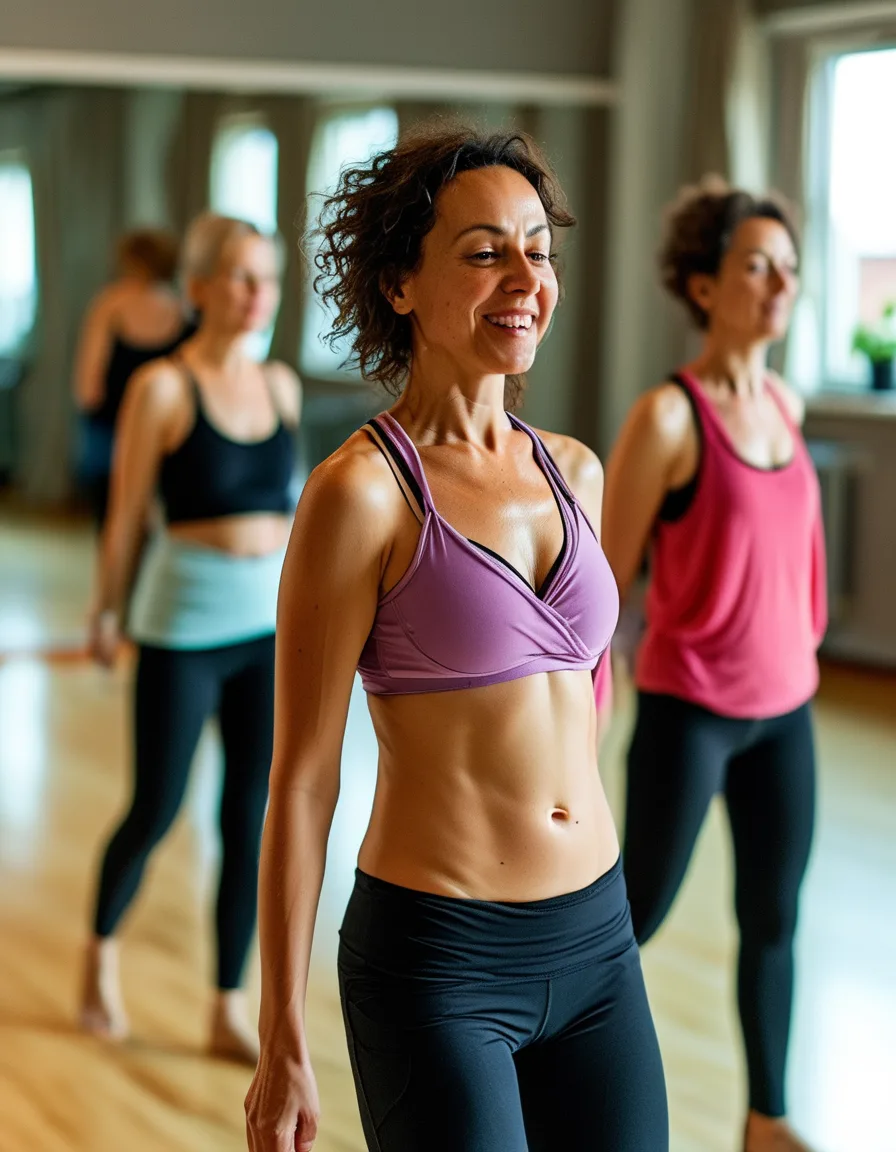
How Do I Modify a Class I Can’t Keep Up With?
Have one fallback step and use it without hesitation. A basic march or step-touch, kept at the class tempo. The instant a sequence gets too fast or complex, drop into it. The critical part is don’t stop moving — stopping is the only thing that actually costs you the workout. Standing still for 40 seconds while you try to figure out the sequence is worse than marching for 40 seconds badly.
Match tempo and energy, not steps. This is the reframe that makes classes enjoyable instead of stressful. Your job is to be moving at the class’s rhythm with roughly the class’s intensity. Direction, arm position, and footwork detail are bonus. Give yourself permission to hit the tempo and let the rest be approximate.
Stand at the back or off to one side. Practical and slightly unglamorous, and it works. Most people don’t modify because they’re worried about being seen modifying, so removing the visibility removes the barrier. Nobody at the front is looking backwards — they’re too busy watching the instructor and their own feet.
Bonus: pick a spot behind someone competent. You get a second reference point that’s easier to read than the mirrored instructor, which solves the left-right problem that trips up most beginners.
5 Mistakes Everyone Makes in Their First Dance Fitness Classes
1. Class-hopping. Trying a different studio, instructor, or format every week means restarting the movement vocabulary each time. Pick one class and go to it repeatedly — instructors reuse a recognizable set of patterns, and you’ll start catching them in week three purely from familiarity.
2. Standing still when lost. The single most common and most costly error. There’s always a march available.
3. Watching your own feet. Looking down breaks your posture, slows you further, and makes it harder to see the next transition coming. Eyes up on the instructor or the person in front of you.
4. Expecting to catch it in one class. Choreographic pattern recognition is a motor skill and develops on a motor-skill timeline — realistically 6–8 weeks of regular attendance before things start clicking. People quit at class three, which is roughly like quitting a language after a week.
5. Never practicing the basics outside class. Ten minutes at home on three or four foundational steps — grapevine, step-touch, basic salsa step, V-step — makes them automatic. Automatic basics free up attention during class for catching the new material, instead of spending all of it on things that should already be reflexive. This is the highest-return ten minutes available.
One practical note: a lot of the flailing in early classes comes from constantly adjusting a waistband or a top during a jump section. High waist leggings with a wide band that stays put remove one thing you’d otherwise be managing while also trying to find the beat.
Mini FAQ
Am I getting less of a workout than everyone else?
Slightly less variety, roughly comparable cardio. If you’re moving continuously at the class tempo, you’re in the same intensity zone as the people executing perfectly.
Which formats are most beginner-forgiving?
Ones built on repeated simple patterns rather than long sequences — Zumba-style classes with high repetition, or cardio dance formats that teach a move before running it. Hip-hop choreography classes are generally the least forgiving for a total beginner.
Do I need to tell the instructor I’m new?
Not required, but a good instructor given that information before class will cue more clearly and check on you. Most appreciate it.
TL;DR:
- Cardio benefit comes from continuous movement and heart rate, not choreographic accuracy.
- Keep one fallback step — march or step-touch — and use it the moment you lose the sequence.
- Match tempo and energy; treat correct footwork as a bonus.
- Stand at the back behind someone competent; it solves visibility and the mirroring problem.
- Stick with one class, practice 4 basics at home, and give it 6–8 weeks.
Keep Reading
This article is for general informational and styling purposes only. Fit, sizing, and product availability may vary.