Why Dance Cardio Makes Your Hip Flexors Sore and Not Your Legs
Quick Answer: Dance cardio involves far more repeated hip flexion - knee lifts, kicks, marches, hip isolations - than walking, running or cycling do, and it does that flexion at speed and often against no resistance except the leg itself. The hip flexors are working concentrically thousands of times in a session with very little rest, which is a stimulus they rarely get elsewhere. The soreness is usually normal training response, and it becomes a problem if it persists past a few days or turns into a pinch at the front of the hip.
You did an hour of dancing and your quads are fine.
The front of your hip feels like you did something to it.
You did. Just not what you expected.
This is general information, not medical advice.
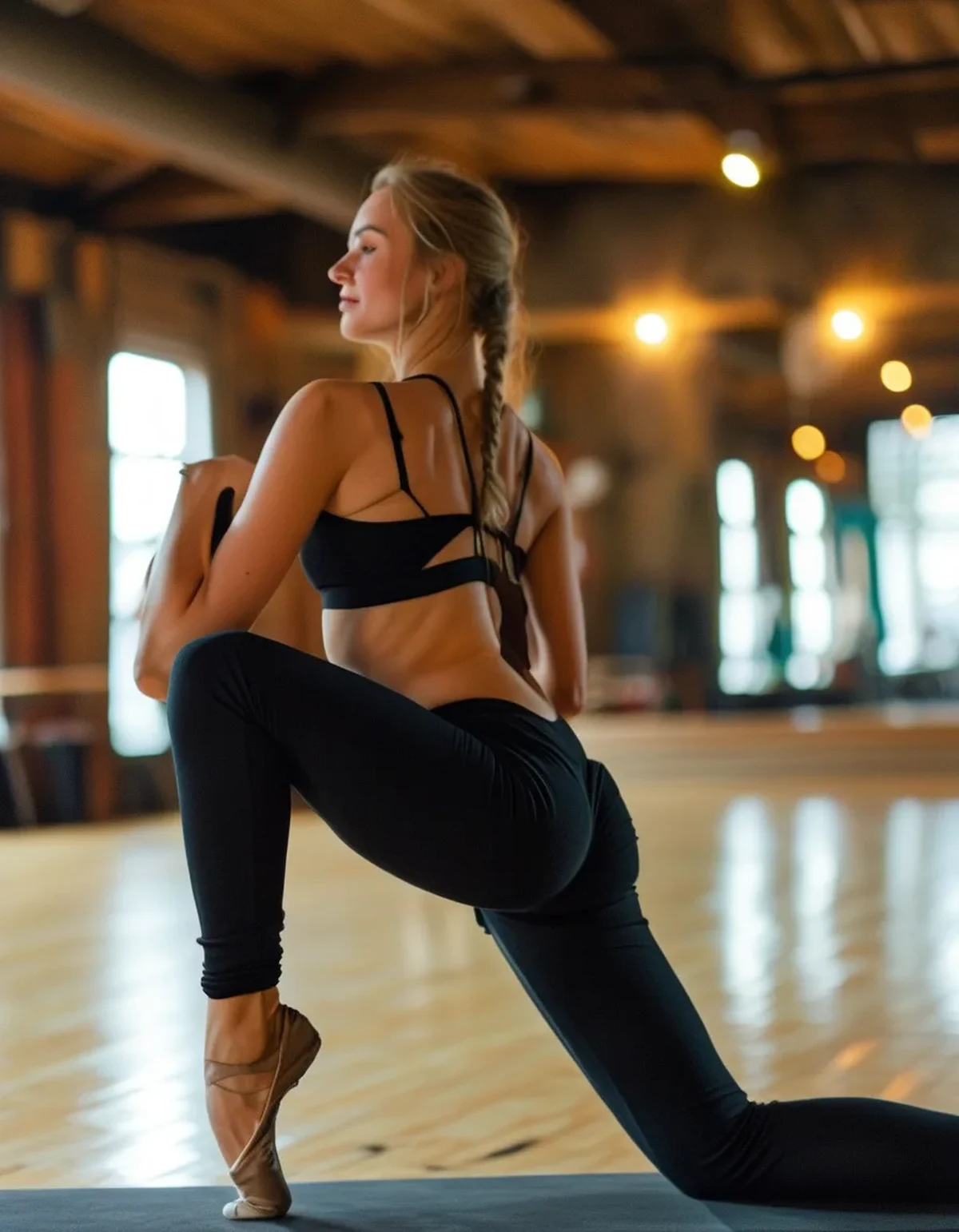
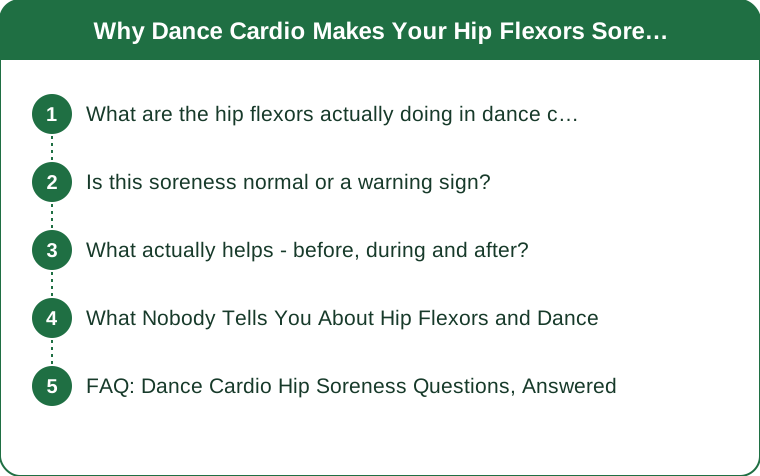
What are the hip flexors actually doing in dance cardio?
Lifting the leg, repeatedly, at speed, with almost no rest.
The hip flexor group - primarily the iliopsoas, with the rectus femoris and a few smaller muscles assisting - lifts the thigh toward the torso. That is hip flexion, and it is the movement in every knee lift, march, kick, jump-and-tuck and grapevine.
A 45-minute dance cardio class can involve well over a thousand hip flexions. Running involves hip flexion too, and at far lower ranges - a running stride lifts the knee modestly, while a dance knee lift takes it to hip height or above.
Three things make dance cardio unusually demanding on these muscles:
- Range. High knee lifts take the hip through a much larger flexion range than any endurance activity
- Speed. The muscle is contracting rapidly and repeatedly with minimal recovery between repetitions
- No support. The leg is lifted against gravity with no ground contact assisting, unlike a squat or a step-up
And there is a fourth factor most people do not consider: the psoas crosses the lumbar spine. The iliopsoas originates on the lumbar vertebrae and inserts on the femur, which means it is both a hip flexor and a contributor to spinal position. Fatigue in it can present as a deep ache that feels more like the lower back or the groin than the hip.
Why the quads escape: the quadriceps work hardest under load and through knee extension against resistance. Dance cardio is body weight, mostly upright, and rarely involves deep knee bending under load. The rectus femoris does get involved - it crosses both joints - which is why some of the soreness sits slightly lower and more toward the front of the thigh.
If you sit for most of the day, the effect is amplified. Prolonged sitting keeps the hip flexors in a shortened position for hours, and asking a chronically shortened muscle to work through full range at speed is a large stimulus.
Is this soreness normal or a warning sign?
Usually normal. The distinction is in the character and the timeline.
Normal delayed onset muscle soreness:
- Appears 12 to 48 hours after the session, not during it
- Feels like a diffuse ache across the muscle area rather than a specific point
- Is worse at the start of movement and eases as you warm up
- Resolves within three to five days
- Affects both sides fairly evenly
Signs it is something else:
- Sharp pain during the movement itself, particularly a pinch at the front of the hip crease
- Pain that is clearly worse on one side, especially if you did not notice a reason
- Clicking or catching accompanied by pain, as opposed to painless clicking which is very common and usually harmless
- Pain that persists beyond a week or gets worse rather than better
- Pain radiating down the front of the thigh or into the groin
- Any sensation of giving way
The pinch at the front of the hip during high knee lifts is worth understanding specifically. It often relates to how the hip is moving in the socket rather than to muscle strain, and it frequently responds to adjusting the movement - slightly less range, a small external rotation of the thigh, better pelvic position - rather than to rest.
The one that genuinely needs attention: pain plus weakness. Soreness that makes movement uncomfortable is normal. Being unable to lift the leg against gravity is not, and that combination is worth having assessed.
And a note on frequency. If every single class leaves you with significant hip flexor soreness even after months, that suggests the tissue is not adapting - usually because sessions are too frequent, too long, or the same movements are repeated without variation. Adaptation should reduce soreness over four to six weeks.
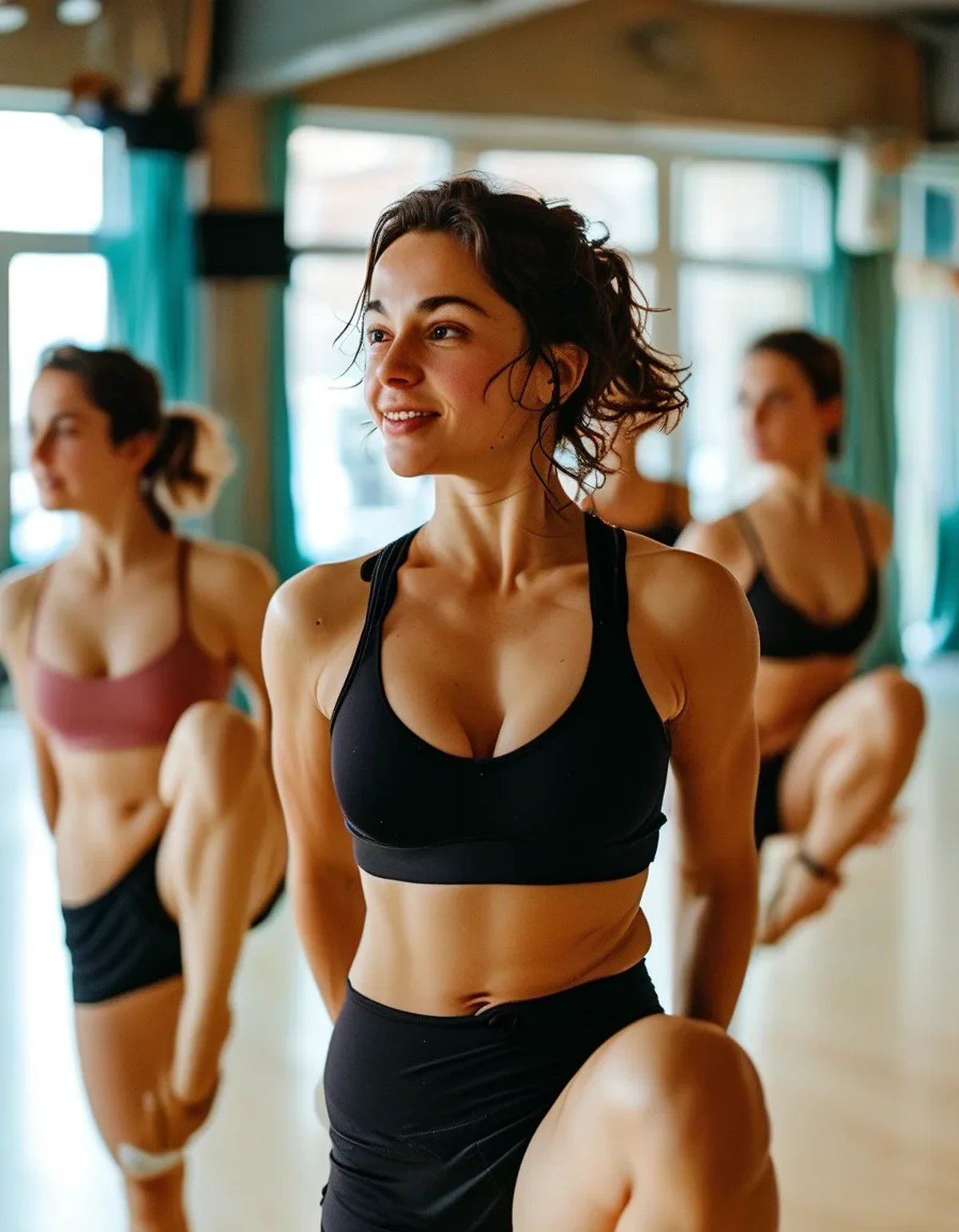
What actually helps - before, during and after?
Warm up the specific movement, manage volume, and strengthen rather than only stretch.
Before class:
- Warm up hip flexion specifically - 20 controlled knee lifts per side, gradually increasing range, before the class begins
- Some hip extension work too - a few slow lunges or hip flexor stretches to counteract the day’s sitting
- Do not stretch hard immediately beforehand. Prolonged static stretching before explosive movement can temporarily reduce power output, and dynamic movement is the better preparation
During class:
- Lower the knee height when the hip flexors start to fatigue rather than pushing to match the room
- Keep the pelvis stable. Compensating by leaning back and using the lower back to swing the leg up is the most common fault and it feeds back pain rather than solving anything
- Take the low-impact option for a track or two when you feel it building - fatigued hip flexors recruit poorly
After class:
- Move gently rather than sitting straight down. Sitting immediately puts the muscle right back into a shortened position
- Gentle hip flexor stretching, held 30 seconds per side, once the muscle has cooled
- Walking on the following day genuinely reduces soreness more than complete rest
The longer-term fix is strengthening, not stretching. Chronic hip flexor tightness is very often weakness presenting as tightness - a weak muscle held short protects itself by staying tense.
Useful strengthening work:
- Standing banded knee raises, 3 sets of 12 per side
- Seated leg lifts with the back supported, which isolates the psoas well
- Dead bugs and hollow holds, which train the flexors alongside the deep core
- Glute bridges and hip thrusts, because strong glutes reduce the compensatory load on the flexors
Two or three sessions a week of that will change the picture within six weeks, and it addresses the cause rather than repeatedly treating the symptom.
What Nobody Tells You About Hip Flexors and Dance
Six things that reframe the problem.
Tightness is usually weakness wearing a costume. A muscle that is weak and held in a shortened position for hours a day feels tight because it is protecting itself. Stretching it provides temporary relief and does not address why it got there. Strengthening does.
Your desk chair is part of your training load. Eight hours of sitting keeps the hip flexors shortened, so the class is asking a muscle that has been in a fixed position all day to work through full range at speed. Standing up every 45 minutes changes the class more than any warm-up.
The psoas attaches to your lumbar spine. Which is why hip flexor fatigue can feel like lower back tightness, and why hip flexor strengthening sometimes resolves back discomfort that stretching the back never touched.
Weak glutes make it worse. If the glutes are not extending the hip strongly, the flexors work harder on the return phase of every movement. Glute strength is a hip flexor intervention, even though it sounds like the opposite.
Leaning back to get the knee higher is the single most common fault. It looks like more range and it is lumbar extension, which loads the back and takes the hip flexor out of its working position. Keep the ribs down and accept a lower knee.
And the one that surprises people: soreness should decrease over weeks. If month four still produces the same soreness as week one, the tissue is not adapting - which usually points to too much volume, too little variation, or insufficient recovery rather than to a hip problem.
FAQ: Dance Cardio Hip Soreness Questions, Answered
How long should hip flexor soreness last?
Three to five days for normal delayed onset soreness, with the peak around 24 to 48 hours after the session. Anything lasting beyond a week, or getting worse rather than better, is worth having looked at.
Should I stretch or strengthen?
Both, with strengthening as the priority. Persistent hip flexor tightness is very often weakness presenting as tightness, and stretching alone gives temporary relief without changing the underlying capacity. Banded knee raises and dead bugs address the cause.
Why does the front of my hip pinch during high knees?
Often a movement-quality issue rather than a muscle strain - how the hip is sitting in the socket during flexion. Try slightly less height, a small external rotation of the thigh, and keeping the pelvis level. Persistent pinching is worth having assessed.
Can I train through it?
Mild soreness, yes - gentle movement usually helps more than rest. Sharp pain during movement, pain on one side only, or any weakness in lifting the leg means stopping and getting it looked at rather than pushing through.
Why do my quads not get sore too?
Quadriceps work hardest under load through knee extension against resistance, which dance cardio rarely involves. The rectus femoris does participate because it crosses both hip and knee, which is why some soreness sits lower toward the front of the thigh.
Does sitting all day make this worse?
Significantly. Prolonged sitting holds the hip flexors in a shortened position for hours, so the class asks a chronically shortened muscle to work at full range and speed. Standing up regularly through the day changes how the class feels more than any single warm-up would.
TL;DR:
- Dance cardio involves over a thousand hip flexions per class, at high range and speed, with no rest
- The quads escape because they work under load through knee extension, which dance rarely involves
- The psoas attaches to the lumbar spine, so fatigue can present as lower back ache
- Normal soreness peaks at 24 to 48 hours and clears in three to five days
- Sharp pain, one-sided pain, weakness or a persistent front-of-hip pinch need assessment
- Strengthen rather than only stretch - tightness here is usually weakness protecting itself
- Strong glutes reduce hip flexor load, and standing up during the workday helps more than it sounds
Leaning back to get the knee higher is the fault to fix first.
Keep Reading
This article is for general informational and styling purposes only. Fit, sizing, and product availability may vary.