The Five-Minute Dance Cardio Warm-Up That Prevents Most Injuries
Quick Answer: Dance cardio has a specific injury profile - ankles, calves, hip flexors, and the sides of the knees - because it involves fast direction changes, repeated small jumps, and a lot of hip flexion, usually on a hard floor. Most online classes give you thirty seconds of marching, which is not a warm-up. Five minutes of the right movement fixes almost all of it: raise the temperature, mobilise the ankles specifically, wake up the glutes, and rehearse the direction changes at half speed. Ankles first, always - they take the highest load and get the least preparation.
This matters more from now onwards, because cold rooms and colder muscles are about to become the default.
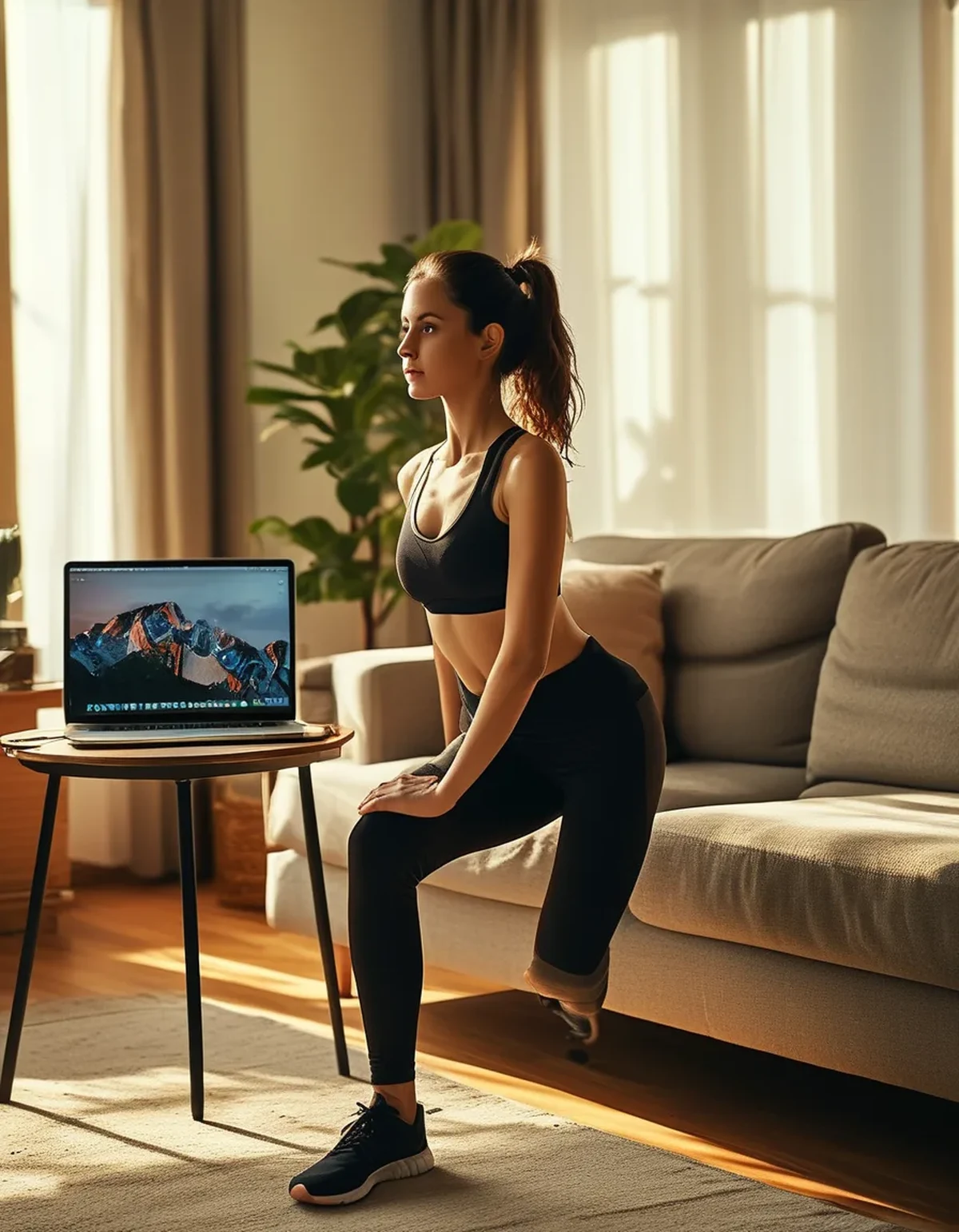
Why does dance cardio need a different warm-up?
Because the demands are unusual, and general warm-ups do not cover them.
Direction change is the defining feature. Running warms you up in a straight line; dance cardio asks for lateral, rotational, and diagonal movement within the first minute. Tissue that is warm for forward movement is not necessarily ready for sideways movement.
The load is small, fast, and repetitive. Hundreds of small bounces and steps rather than a few big efforts. That is a calf and Achilles pattern, and calves are the tissue that most needs warming before repeated small impacts.
Hip flexors work constantly. Knee lifts, kicks, and marches all load the hip flexors, and they are usually short and tight from sitting. Going straight from a desk chair into a knee-lift sequence is asking a shortened muscle to work at end range immediately - which is why hip flexor soreness after dance cardio is so common.
The floor is usually hard. Living room, kitchen tile, or a wooden studio floor. Almost nobody does dance cardio on a sprung floor, which is what the movement was designed for.
And the class starts at full speed. The choreography does not build; it just begins. You are the only one who can build the ramp, and five minutes is enough.
What should the five minutes actually contain?
Four blocks, in this order. The order matters.
Minute 1: raise the temperature. March, then step side to side, then add arms. Nothing precise, just movement - the goal is blood flow and a slight rise in body temperature. You should feel warmer, not tired.
Minutes 2-3: ankles and calves specifically. Ankle circles, ten each direction each foot. Then heel raises, 15 slow reps, and heel-toe rocks, 20. Then rise onto the balls of the feet and lower slowly, which loads the Achilles gently through range. This is the highest-value part of the whole warm-up and it is the part every online class skips.
Minute 4: hips and glutes. Ten leg swings forward and back each side, then ten across the body. Then fifteen bodyweight squats or ten glute bridges. The swings mobilise the hip flexors dynamically; the squats or bridges wake the glutes so they contribute rather than letting the quads and hip flexors do everything.
Minute 5: rehearse the movement. Half-speed grapevines, step-touches, and small direction changes. This is the piece that most closely predicts injury prevention, because it prepares the exact pattern you are about to do fast.
What to leave out: long static stretches. Holding a stretch for 30+ seconds before explosive work temporarily reduces power output and does nothing for injury risk. Save the static work for afterwards.
What Nobody Tells You About Dance Cardio Injuries
The calves and shins get the worst of it, not the knees. Everyone worries about knees; the actual common complaints are calf tightness, Achilles soreness, and shin splints - all impact and repetition problems, all preventable with an ankle-focused warm-up.
Barefoot on a hard floor is the highest-risk combination. Dance cardio barefoot on tile or laminate gives you no shock absorption at all. Shoes with a bit of cushion, or at minimum a mat, changes the loading significantly for anyone doing this more than twice a week.
Your hip flexors are sore because your glutes are quiet. If hip flexor soreness is your consistent post-class experience, the glute work in minute 4 is the fix, not more hip flexor stretching.
The second class of the week is riskier than the first. Tissue that has not fully recovered from an unfamiliar pattern is where problems accumulate. Building up frequency slowly matters more than building up intensity.
Cold rooms make everything worse. Muscle is measurably stiffer and less compliant when cold, and most home dance cardio happens in a room that has not been heated yet. From October onward the warm-up should be longer, not shorter, which is exactly the opposite of what most people do when it is cold and they want to get moving.
Following on a small screen changes your movement. Looking down at a laptop or phone puts your head forward and shifts your balance, which subtly alters how you land. Raise the screen to eye level - it is a free improvement to both your form and your neck.
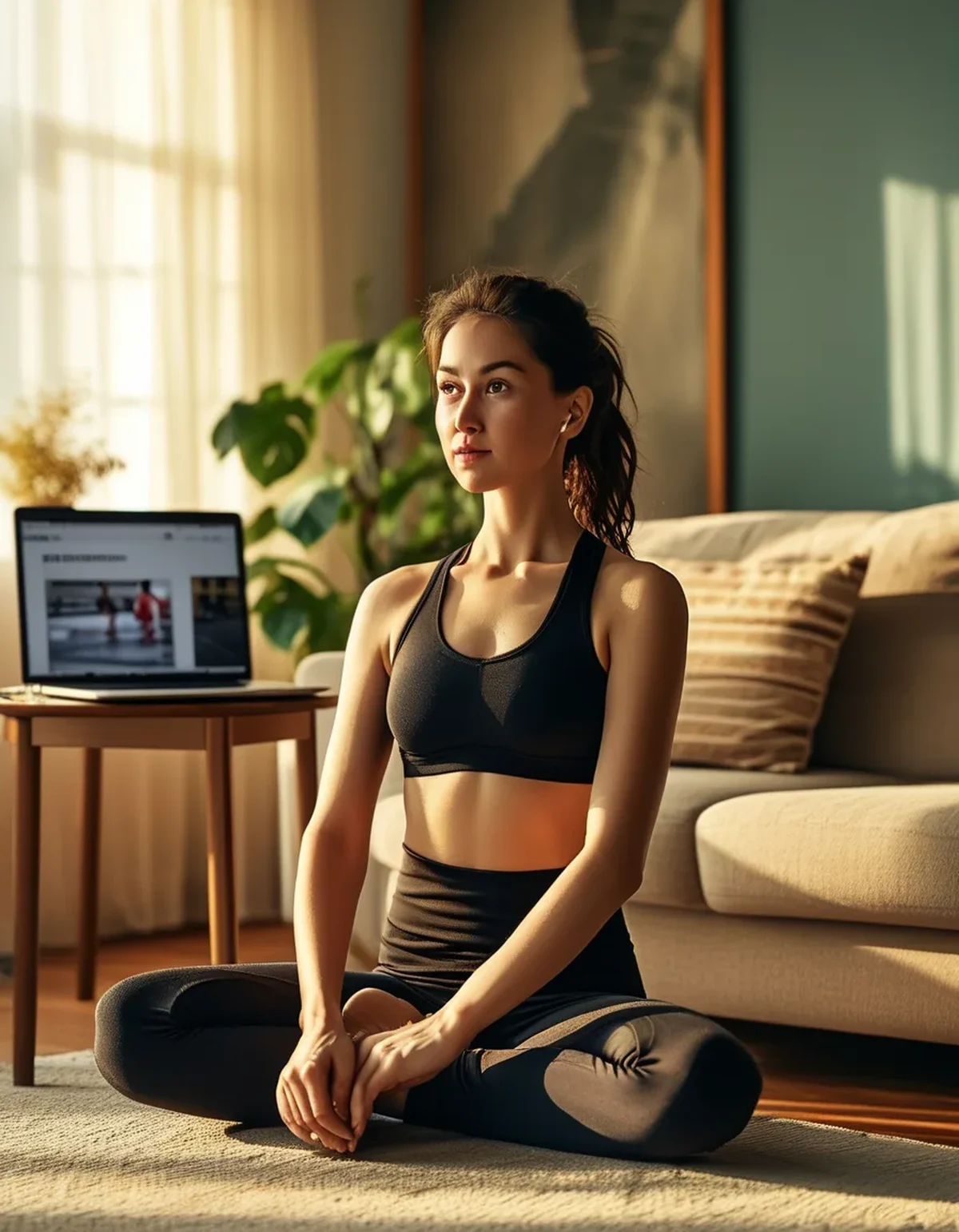
How do you adapt it when the room is cold?
Longer, and in a specific direction.
Add two minutes, all at the start. Cold tissue needs more time at the general-warming stage before any range-of-motion work. Seven minutes rather than five, once the room is below about 16C.
Keep a layer on for the warm-up and take it off after. Warming up in a hoodie and removing it once you are actually warm is standard practice in every sport and almost never done at home. It genuinely shortens the time to being properly warm.
Spend more time on ankles and calves specifically. These are the tissues most affected by cold - they are furthest from your core, they have less blood flow, and they take the impact.
Do not skip because you are short on time. The temptation on a cold dark evening is to shorten the warm-up in order to keep the workout intact. Reverse it - a 25-minute class with a proper warm-up beats a 30-minute class cold.
Consider what you are wearing on your feet. Cold feet on a cold floor are stiff feet, and the ankle mobility you had in July is not there in November. Socks or shoes for the warm-up at minimum.
Hydration still matters when you are not sweating visibly. In cooler weather people drink less and still lose fluid. Dehydrated muscle cramps more, and calf cramp mid-class is a very common autumn complaint.
What should you do afterwards?
The cool-down is shorter and mostly serves a different purpose.
Two to three minutes of gradually slowing movement. Marching down to walking. This is genuinely useful - stopping abruptly after high-intensity work can leave you lightheaded.
Now do the static stretching. Calves against a wall, hip flexors in a half-kneel, quads, and the outside of the hips. 30 seconds each, and this is the moment where it helps rather than hinders.
Calves first and longest. They took the most load and they are the most likely source of tomorrow’s complaint.
Roll the calves and the outside of the thigh if you have a roller. Two minutes, and it makes a noticeable difference to next-day soreness for most people.
Eat something with protein reasonably soon after. Not urgent to the minute, but within a couple of hours.
And notice what hurts tomorrow. Muscle soreness in the calves, glutes, and quads is normal. Joint pain, sharp pain, or anything that hurts on the first step out of bed and gets worse with movement is not - and shin pain that persists beyond a few days deserves attention rather than another class. This is general information, not medical advice.
FAQ: Dance Cardio Warm-Ups, Answered
Is the warm-up in my online class enough?
Usually not. Most are 30-60 seconds of marching, which raises the heart rate but does nothing for ankle mobility or glute activation. Do your five minutes first, then start the video.
Should I stretch before?
Dynamic movement yes, long static holds no. Static stretching before explosive work temporarily reduces power and does not reduce injury risk. Save it for after.
Do I need shoes?
On a hard floor, doing this more than twice a week, yes - a supportive trainer with some cushioning. On carpet or a mat, barefoot is fine for most people.
What if I only have two minutes?
Ankles and calves, then half-speed rehearsal. Those two blocks cover the majority of the risk. Skip the general warming and let the first song do it.
Why do my hip flexors hurt more than my legs?
Because knee lifts and marches load them constantly, and they start short from sitting. Glute work in the warm-up and hip flexor stretching afterwards is the pairing that fixes it.
Does this apply to low-impact dance cardio too?
Less so for the calves, but the direction-change and hip flexor points still hold. Three minutes rather than five is reasonable for genuinely low-impact classes.
TL;DR:
- Dance cardio’s injury profile is ankles, calves, hip flexors, and shins - not knees, which is what everyone worries about.
- Five minutes: one minute general warming, two minutes ankles and calves, one minute hips and glutes, one minute half-speed rehearsal.
- Ankles get the highest load and the least preparation. That block is the most valuable one.
- Skip static stretching beforehand - it reduces power and does not prevent injury. Do it afterwards.
- Sore hip flexors usually means quiet glutes, not tight hip flexors.
- In a cold room, make the warm-up longer, not shorter - seven minutes below 16C, and keep a layer on for it.
The reason this gets skipped is that a dance class is supposed to be the fun part, and warming up is not. But five minutes at the start is a much better trade than three weeks off with a sore Achilles.
Keep Reading
This article is for general informational and styling purposes only. Fit, sizing, and product availability may vary.