The Living Room Dance Party: Cardio for People Who Hate Cardio
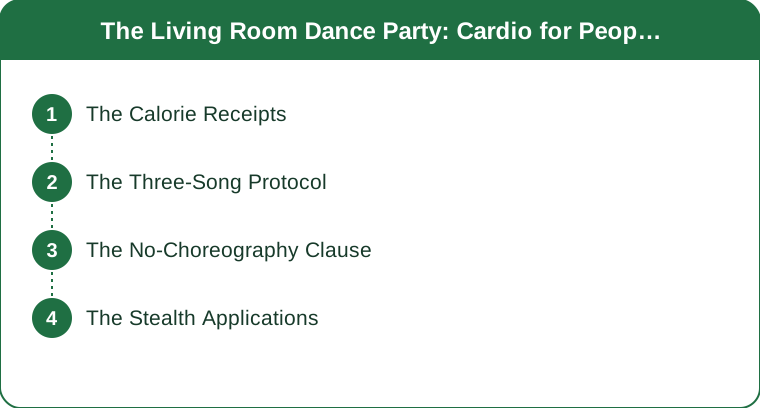
Quick Answer: A living room dance party is a three-song, ten-minute cardio session with no choreography: one warm-up song, one full-commitment song, one anthem. Vigorous dancing burns roughly 300+ calories per half hour — comparable to jogging — while your brain files it as fun rather than exercise.
Somewhere between the gym membership you dread and the couch you love lives a third option.
Three songs of unhinged movement burns real calories, floods your mood chemistry, and requires exactly zero skills, equipment or planning. It takes less time than finding your gym shoes.
The curtains are a personal decision.

Does Dancing Actually Count as Cardio?
Yes, and the numbers are unremarkable in the best way.
Vigorous dancing lands in the ballpark of jogging — commonly cited at 300+ calories per half hour for a 150lb person, depending on intensity and how committed you are to the chorus. It reliably pushes most people into the moderate-to-vigorous heart rate zone, which is the zone the physical activity guidelines actually care about.
Your heart rate cannot tell a burpee from a chorus jump. Only your morale can, and morale votes dance.
There’s a second, less measurable benefit: dance combines cardiovascular work with music and rhythm, and studies on dance interventions consistently show mood improvements that plain treadmill work doesn’t match. The exercise you enjoy is the exercise you repeat.
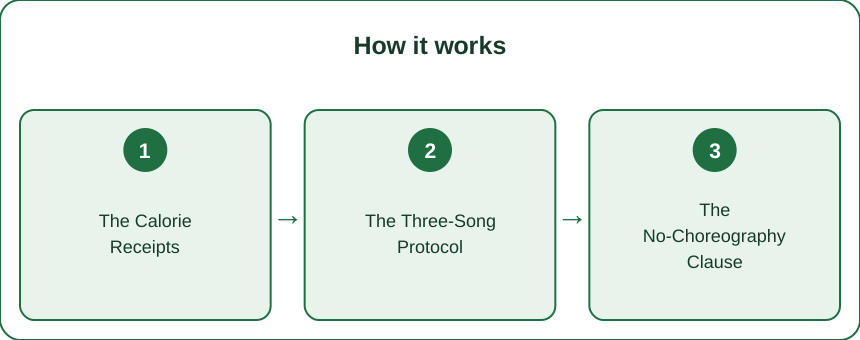
The Three-Song Protocol
Song one: the warm-up bop. Something mid-tempo. Shoulders loosening, hips waking up, feet moving. Don’t go hard yet — this is the 3 minutes that means your calves aren’t furious tomorrow.
Song two: the banger. Full commitment. Jumping optional but encouraged, air guitar legal, floor moves at your own risk. This is where the heart rate lives.
Song three: the anthem you cannot not dance to. Everyone has one. It’s probably embarrassing. That’s the point — it guarantees the last three minutes happen.
Ten minutes, done. Repeat when the mood strikes. The mood will strike.
If you want a real workout rather than a mood reset, run the protocol three times through with a water break between rounds. That’s roughly 30 minutes of moderate-to-vigorous activity, which is most of a day’s recommendation.
The No-Choreography Clause
This is not a class. There are no counts, no eight-beat sequences, and nobody grading the transitions.
Flailing counts. Marching in place counts. The move you invented in 2009 and never retired counts. Research on dance and mood does not check your form — it checks that you moved and grinned, and both are essentially guaranteed here.
If you want structure, follow a video. But the entire advantage of this over a class is that it removes every barrier between “I should move” and moving. Adding choreography puts one back.
Where Else Does This Hide?
Dance installs itself wherever a speaker lives:
- The cleaning playlist — chores plus cardio, and the floor gets done
- Kitchen discos while dinner simmers — two songs is a stir-and-shimmy window
- The pre-shower two-song special — you’re about to shower anyway, so sweat is free
- The 3pm slump breaker — one song, at your desk, standing. Genuinely effective against the afternoon crash
This is what movement researchers politely call “incidental activity,” and it accumulates faster than anyone expects. Four scattered ten-minute sessions across a week is 40 minutes of cardio nobody had to schedule.
What Nobody Tells You
Your downstairs neighbors are a real consideration. Low-impact dancing — no jumping, weight shifts and arm work instead — burns nearly as much and keeps the peace. Rugs help.
Bare feet on hardwood is how ankles get rolled. Sneakers or grippy socks, especially for the banger.
You will be more out of breath than you expect. Dancing recruits arms, core and legs simultaneously in a way that walking doesn’t. That’s not you being unfit; that’s the workout working.
Ten minutes feels like nothing until song two. Then it feels like a real decision. Push through — song three is the reward.
A caveat worth stating: if you have joint problems, a heart condition, are pregnant, or haven’t done cardio in a long time, start with the low-impact version and check with a doctor before going hard. Enthusiasm is not a warm-up.
Mini FAQ
How many calories does dancing really burn?
Roughly 200–400 per half hour depending on your weight and how vigorously you go. Slow swaying is closer to walking; committed, continuous, full-body dancing is closer to jogging. The honest answer is that intensity matters more than the activity label.
Is this enough exercise on its own?
For cardiovascular health, several sessions a week gets you meaningfully toward the standard 150 minutes of moderate activity recommendation. It won’t build strength, though — pair it with some resistance work a couple of times a week if that matters to you.
What if I have absolutely no rhythm?
Then you’re in the majority and it changes nothing. Rhythm is a performance concern; your cardiovascular system has no opinion on whether you’re on the beat.
TL;DR:
- Three songs, ten minutes: warm-up bop, full-commitment banger, unavoidable anthem.
- Vigorous dancing burns ~300+ calories per half hour — comparable to jogging.
- No choreography, no counts, no skill required. Flailing counts.
- Repeat 3× through for a full 30-minute cardio session.
- Wear grippy socks or sneakers, go low-impact for neighbors and joints, and check with a doctor if you’re new to cardio.
Three songs, full commitment, zero witnesses required. Cardio was never the problem — the treadmill’s playlist was. Yours is better, and the living room floor has been cleared for years.
Keep Reading
This article is for general informational and styling purposes only. Fit, sizing, and product availability may vary.