The Real Reason Dance Fitness Gets Boring Around Week Six
Almost everyone who starts dance fitness hits a wall around the six-week mark, and it’s rarely about fitness level. It’s a predictable pattern rooted in how the brain responds to repeated choreography, and there’s a specific fix that doesn’t involve switching workouts entirely.

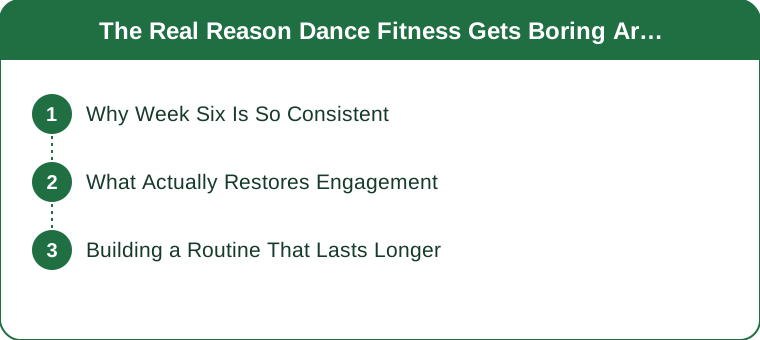
Why Week Six Is So Consistent
The pattern behind it: the the-novelty-wears-off-on-schedule (the initial dopamine hit from learning new choreography reliably fading around four to six weeks once the moves become fully memorized), the the-plateau-isnt-physical (the boredom showing up well before any physical plateau in fitness level, meaning it’s a motivation problem, not a fitness ceiling), the the-same-routine-same-order-issue (running the identical sequence of songs and moves each session removing the small variability that originally made the workout feel engaging).

What Actually Restores Engagement
The fix that works: the the-reorder-dont-replace (simply reordering the same set of moves into a new sequence being enough to restore engagement, without needing to learn a whole new routine), the the-tempo-variation-trick (speeding up or slowing down familiar choreography changing the physical challenge and the mental engagement simultaneously), the the-social-accountability-boost (a single scheduled session with another person, even virtually, measurably improving adherence through the exact week-six dip).
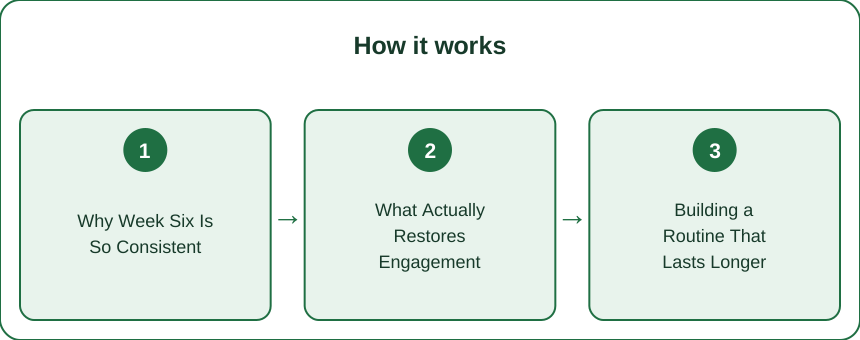
Building a Routine That Lasts Longer
The longer-term structure: the the-rotate-styles-monthly (rotating between two or three dance fitness styles on a roughly monthly cycle preventing any single style from hitting its own novelty wall), the the-track-something-other-than-weight (tracking move mastery or routine complexity rather than only weight or calories, since that’s a metric that keeps improving even after fitness gains slow), and the frame (reordering and re-tempoing the same moves beats abandoning the workout entirely when week six boredom hits)).
The motivation dip that hits almost everyone around week six of a dance fitness routine isn’t a sign of hitting a physical plateau — it shows up well before fitness gains actually slow, and it’s really about the initial novelty of learning new choreography wearing off right on schedule. The fix isn’t to abandon the workout for something new; reordering the same familiar moves into a different sequence, or varying the tempo up or down, restores much of the engagement without requiring a whole new routine to learn. Rotating between two or three styles on a monthly cycle, and tracking something other than weight or calories, helps the habit survive past the point where most people quit. The Real Reason Dance Fitness Gets Boring Around Week Six is predictable, and so is the way past it.
Keep Reading
This article is for general informational and styling purposes only. Fit, sizing, and product availability may vary.