Why Dance Cardio Stops Feeling Like a Workout Once You've Learned the Routine
Quick Answer: Once choreography becomes memorized, your brain spends far less energy on motor learning, which lowers overall exertion even though the physical movements haven’t changed — the fix is adding intensity variables (bigger range of motion, added impact, faster tempo) rather than assuming you need a completely new routine every time.
This catches a lot of dance cardio fans off guard, because it feels like the workout itself got easier, when really your brain got more efficient at a task that used to require real cognitive effort.
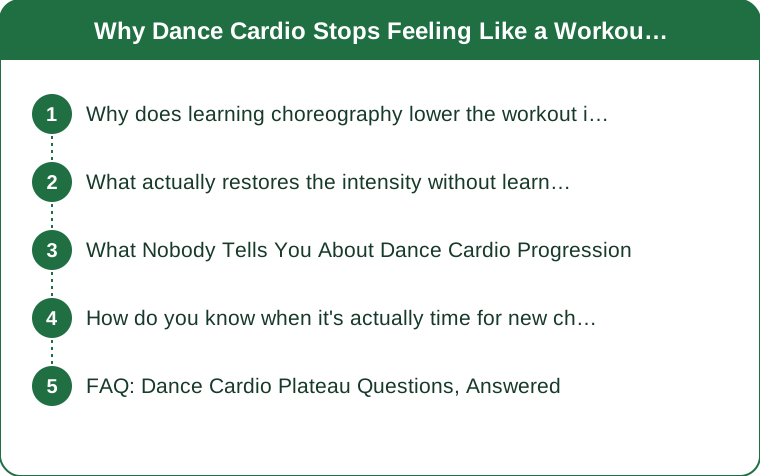
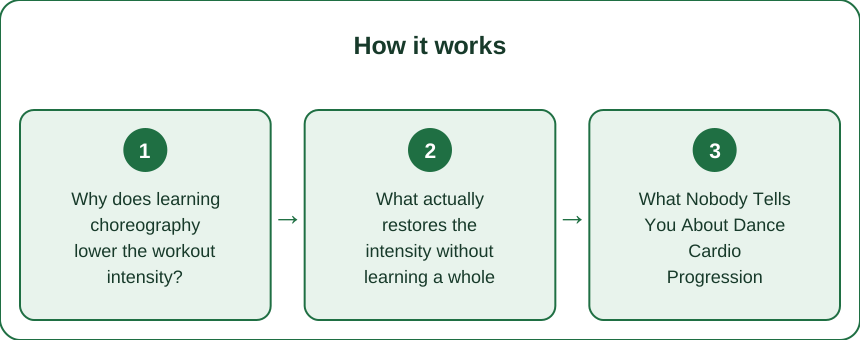
Why does learning choreography lower the workout intensity?
A meaningful portion of the calorie burn and heart rate elevation in a brand-new dance cardio routine comes from cognitive load — your brain working hard to process and execute unfamiliar movement patterns, which itself raises heart rate and effort beyond the pure physical movement. Once the choreography is memorized, that cognitive tax drops sharply, and you’re left with just the physical movement’s baseline intensity.
This is well-documented in motor learning research broadly: novel movement patterns cost more metabolically than the same movements once automated, which is exactly why week-one exhaustion doesn’t match week-six ease even with identical steps.
What actually restores the intensity without learning a whole new routine?
- Increase range of motion — bigger arm extensions, deeper squats within the same steps, more dramatic weight shifts
- Add impact — turning a step-touch into a light hop, adding a small jump to a transition that was previously flat-footed
- Increase tempo — running the same choreography to a faster-paced track adds real cardiovascular demand without changing a single step
- Add resistance — light wrist or ankle weights during a familiar routine reintroduce a physical challenge that memorization removed
What Nobody Tells You About Dance Cardio Progression
Here’s what most dance cardio classes don’t explicitly teach: you don’t need to constantly learn new choreography to keep progressing — in fact, constantly learning new routines can actually keep intensity artificially propped up by cognitive load alone, without ever building the muscular endurance and cardiovascular adaptation that comes from performing a routine with full physical effort once it’s automatic.
Some of the most effective dance cardio progression comes from mastering a routine, then deliberately performing it bigger, faster, and with more force — treating memorization as the starting line for physical intensity, not the finish line for the workout itself.
How do you know when it’s actually time for new choreography?
A useful check: after maxing out range of motion, tempo, and impact on a familiar routine, if your heart rate and perceived effort still feel notably lower than a genuinely hard session, that’s when new choreography adds real value again — through fresh cognitive load, not just physical variety.
Many instructors default to introducing new routines every single class regardless of this, which works for engagement and fun but isn’t necessary for continued fitness progress if that’s your primary goal.
FAQ: Dance Cardio Plateau Questions, Answered
Does this mean repeating the same routine is actually more effective long-term?
Not universally — variety helps with motivation and works different movement patterns, but for pure cardiovascular progression, deliberately increasing intensity on familiar choreography is a legitimate and often underused strategy.
How long does it typically take for a routine to become “memorized” enough to lose its cognitive load benefit?
For most people, 4-8 repetitions of the same routine is enough to shift from active learning to automatic execution, though this varies with routine complexity and individual dance experience.
Can adding music with a different tempo really change the workout that much?
Yes — running familiar choreography 10-15% faster measurably increases cardiovascular demand without altering the actual movement pattern, making it one of the simplest intensity levers available.
TL;DR:
- Learning new choreography burns extra energy through cognitive load, not just physical movement — that fades once it’s memorized
- Bigger range of motion, added impact, faster tempo, or light resistance all restore intensity on familiar routines
- Constantly learning new choreography can mask a lack of real physical progression underneath
- New routines genuinely help again once you’ve maxed out intensity variables on a familiar one
Keep Reading
This article is for general informational and styling purposes only. Fit, sizing, and product availability may vary.