Why You Keep Avoiding the Mirror in Dance Cardio (and Why That's Actually Hurting You)
Quick Answer: Avoiding the mirror removes your fastest feedback loop for timing and form — using it briefly for orientation checks, not constant self-judgment, actually speeds up learning choreography and builds confidence faster than avoiding it.
You pick the spot furthest from the mirror, or you stare at your shoes the whole class. It feels like self-protection, but it’s quietly costing you the one tool in the room that would make the choreography click faster.
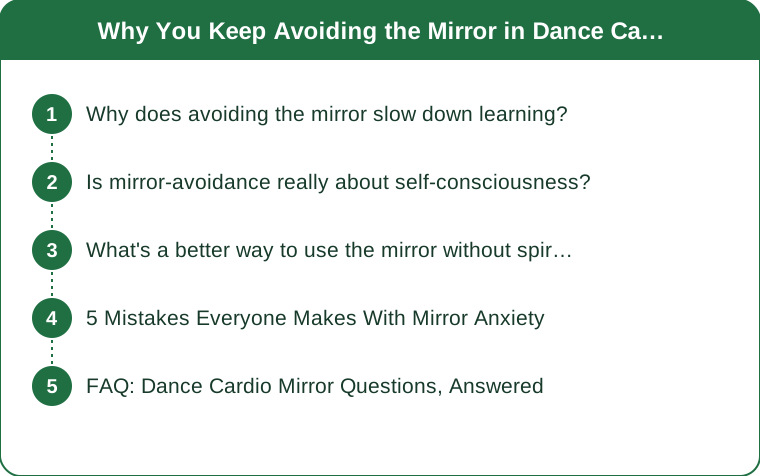
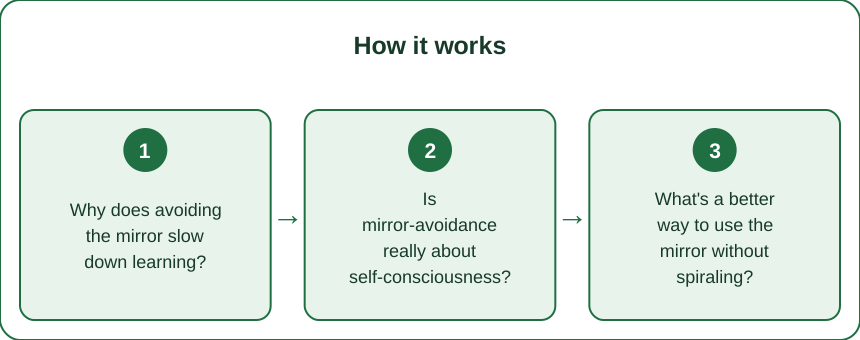
Why does avoiding the mirror slow down learning?
The mirror gives instant visual feedback on timing, spacing, and whether your movement actually matches the instructor’s — without it, you’re relying only on how a move feels, which is a much slower way to catch and correct mistakes, especially early on.
Is mirror-avoidance really about self-consciousness?
Usually, yes — but the anxiety is about being judged, not about the mirror itself. The fix isn’t avoiding the reflection; it’s reframing what you’re using it for: a technical reference point, not a judgment panel. Nobody else in the room is watching your reflection as closely as you assume.
What’s a better way to use the mirror without spiraling?
Glance at it for specific checks — arm height during a combo, whether you’re a beat behind — rather than watching your whole body the entire class. Some instructors suggest using peripheral vision instead of a direct stare, which keeps the feedback without the self-critique spiral.
5 Mistakes Everyone Makes With Mirror Anxiety
1. Standing in the back corner every single class. This removes visual feedback entirely and keeps you dependent on feel alone indefinitely.
2. Watching only your own reflection. Glancing at the instructor’s reflection for timing cues is often less anxiety-inducing and just as useful.
3. Assuming everyone’s watching you. Most people in a dance cardio class are focused entirely on their own coordination, not yours.
4. Quitting a combo the moment you’re off-beat. Being briefly out of sync and self-correcting via the mirror is exactly how the timing improves.
5. Never moving toward the front. Confidence with the mirror builds gradually — moving up one row every few classes works better than an all-or-nothing jump.
FAQ: Dance Cardio Mirror Questions, Answered
Should beginners avoid the mirror in dance cardio?
No — brief, specific-purpose glances actually speed up learning timing and spacing, even for total beginners. Full avoidance just removes a useful feedback tool.
Why do I feel like everyone’s watching me in the mirror?
This is a common but usually inaccurate perception — most classmates are focused on their own coordination and rarely watching others’ reflections closely.
How do I get more comfortable with the mirror over time?
Start in the back row using peripheral glances, then move up one row every few classes as the anxiety fades with repeated, low-stakes exposure.
TL;DR:
- Mirror avoidance removes your fastest feedback loop for timing and spacing
- The anxiety is about being judged, not the mirror itself
- Use it for specific checks, not constant self-critique
- Move up a row gradually rather than all at once
The mirror is a tool, not a judge — using it briefly gets you dancing on-beat faster.
Keep Reading
This article is for general informational and styling purposes only. Fit, sizing, and product availability may vary.