Dance Cardio Hurting Your Knees? 4 Modifications That Fix It Without Losing the Fun
Quick Answer: Dance cardio knee pain usually comes from pivoting on a planted foot, not the cardio itself. Keep a soft bend in your knees, pivot on the ball of your foot instead of the heel, and swap deep lunges for smaller steps until the ache clears.
You love the playlist, you love the sweat, but by song three your knee is barking. That’s not a sign dance cardio isn’t for you — it’s almost always a footwork fix away from feeling completely different.
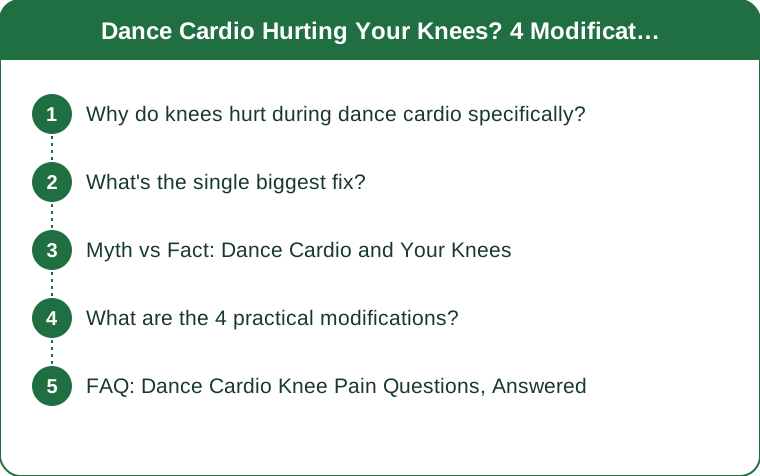
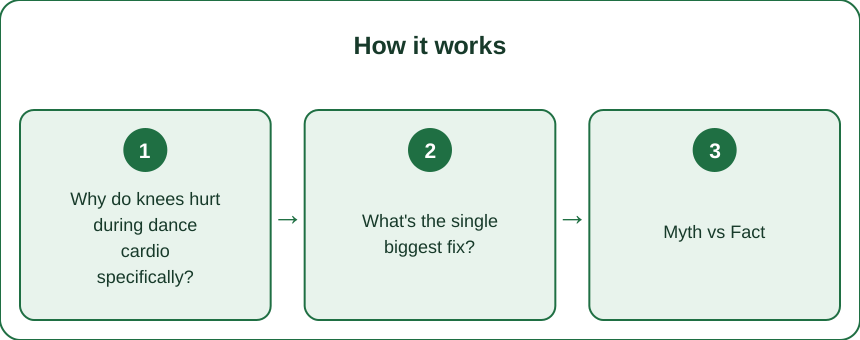
Why do knees hurt during dance cardio specifically?
Most dance cardio pain comes from rotational stress — pivoting your whole body while your foot stays planted flat on the floor. That twisting motion loads the knee joint sideways, which it isn’t built for.
Add a locked, straight knee to that twist and you’ve got the exact combination that flares up cartilage and ligament irritation. The moves aren’t the problem. The way your foot is grounded during them is.
What’s the single biggest fix?
Pivot on the ball of your foot, not a flat planted heel. Lifting your heel slightly lets your whole leg rotate as one unit instead of twisting at the knee.
Pair that with a soft, slightly bent knee at all times — never locked straight. This one change resolves the majority of dance cardio knee complaints within a single class.

Myth vs Fact: Dance Cardio and Your Knees
Myth: High-impact means bad for knees. Fact: Impact isn’t the enemy — poor landing mechanics are. A soft-kneed jump lands safer than a stiff-kneed step touch done wrong.
Myth: If it hurts, just push through, you’ll adapt. Fact: Sharp or sideways knee pain is a stop signal, not a warm-up signal. Dull muscle fatigue is fine to push through; joint pain is not.
Myth: You need new shoes to fix it. Fact: Shoes matter less than most people think. A cushioned, non-grippy sole helps pivots glide instead of catching, but footwork technique fixes far more than footwear does.
What are the 4 practical modifications?
- Swap deep lunges for smaller strides — a shallow lunge trains the same muscles with a fraction of the knee torque
- Replace pivot turns with step turns — take 2-3 small steps to turn instead of twisting on one planted foot
- Land jumps quieter — a silent landing means your knees absorbed the shock properly; a loud stomp means they didn’t
- Cap high-impact songs at 2 in a row, then drop to a low-impact track before your next high-impact one
Most people can keep 90% of the choreography with these swaps — modifying doesn’t mean doing a different workout.
FAQ: Dance Cardio Knee Pain Questions, Answered
Is dance cardio bad for your knees long-term?
No — done with good footwork, it’s no harder on knees than running, and the rotational strength it builds can actually protect joints elsewhere. The risk is specifically in sloppy pivots, not the format.
Should you keep dancing through mild knee soreness?
Dull, general fatigue in the surrounding muscles is fine. Any sharp, sideways, or swelling-associated pain means stop that class and modify next time — don’t dance through it hoping it fades.
Do knee sleeves actually help with dance cardio?
They can add proprioceptive feedback and mild support, but they don’t fix twisting mechanics. Use one as an assist while you correct footwork, not as a substitute for it.
TL;DR:
- Knee pain in dance cardio is almost always rotational stress from flat-footed pivots, not the workout itself
- Pivot on the ball of your foot with a soft bent knee — this alone fixes most cases
- Swap deep lunges for shallow ones, pivots for step-turns, and cap high-impact songs at 2 in a row
- Sharp or sideways pain means stop and modify, not push through
Keep the playlist, keep the sweat, just fix the footwork — your knees will let you know within one class.
Keep Reading
This article is for general informational and styling purposes only. Fit, sizing, and product availability may vary.