Why Following Dance Cardio on a Phone Screen Is So Much Harder
Quick Answer: A small screen removes the two things that make choreography learnable: peripheral vision of the whole body and depth cues. On top of that, most instructors film mirrored — or worse, inconsistently mirrored — so your brain is doing a left-right translation on top of everything else. The fixes are practical: get the screen higher and further away, learn the footwork before adding arms, and check whether your instructor mirrors before deciding you cannot follow.
You can follow a class in a studio. You cannot follow the same routine on your phone, and it feels like a personal failing.
It is a perception problem, and most of it is fixable without getting any better at dancing.
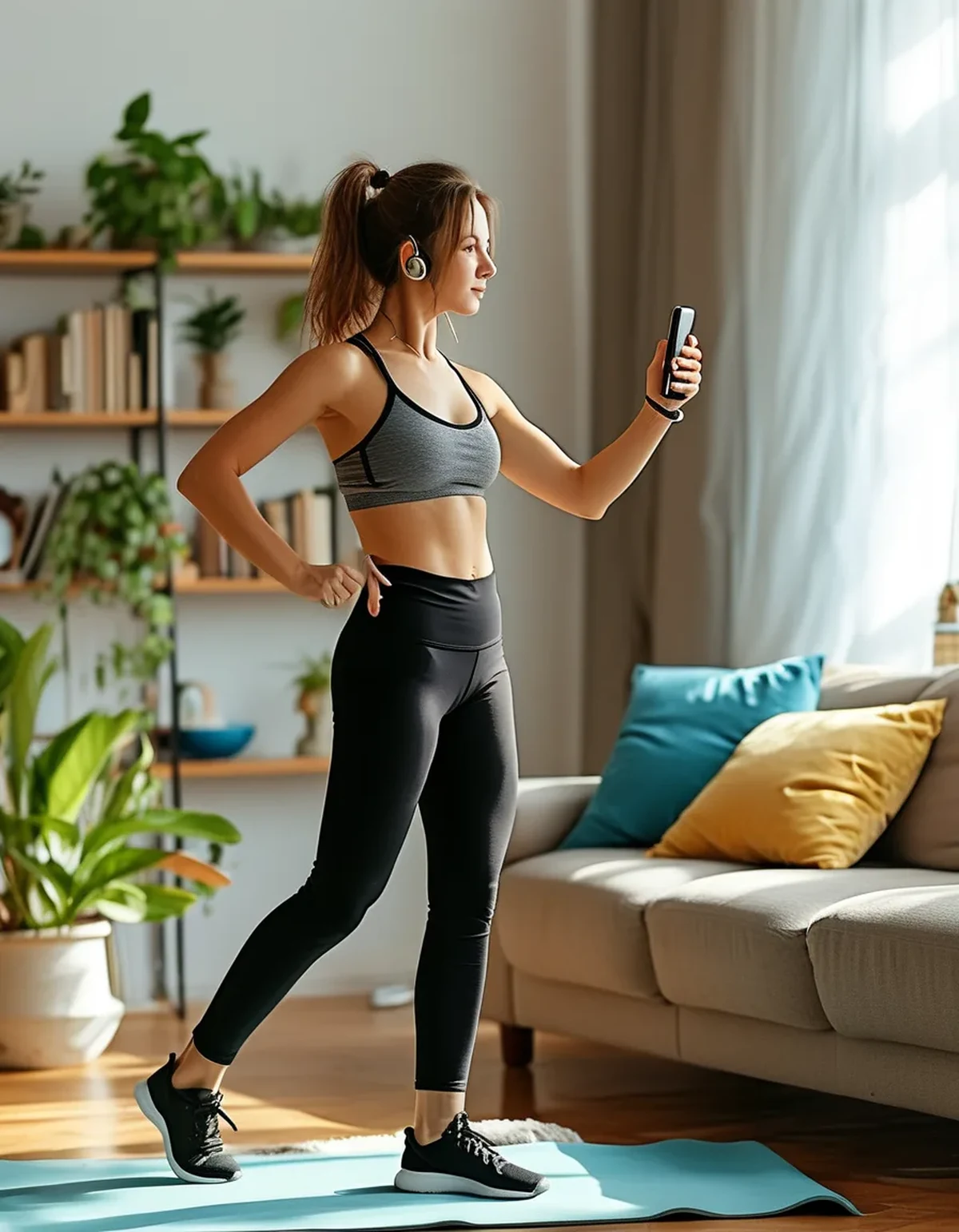
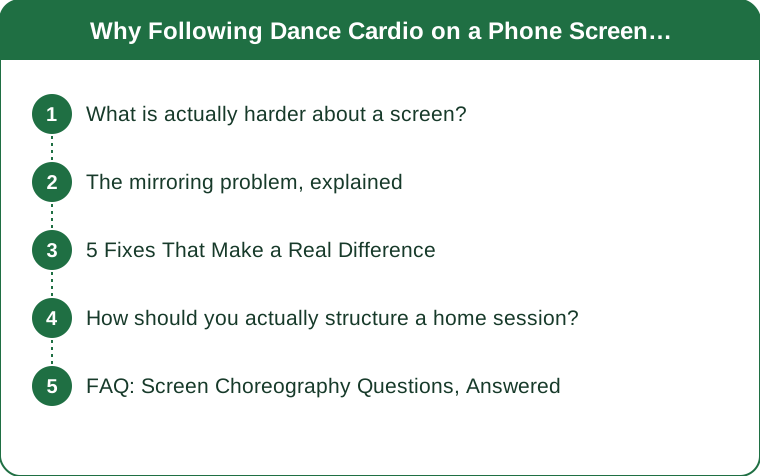
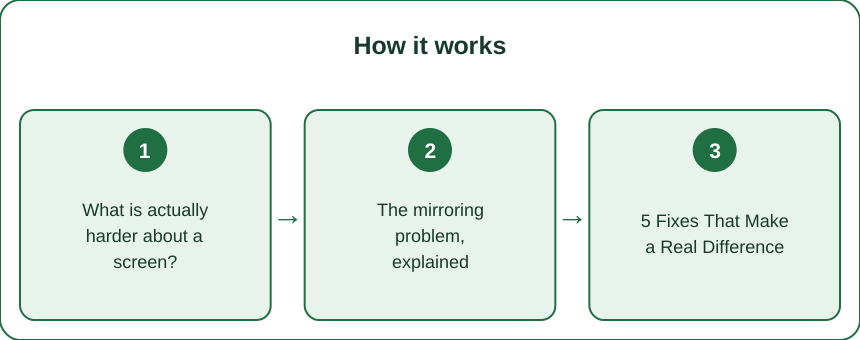
What is actually harder about a screen?
Four things, and none of them are about coordination.
You lose the whole body. In a studio you see the instructor’s full figure in your peripheral vision while looking roughly at their torso. On a phone at arm’s length, the figure occupies a few centimetres — feet and hands are tiny, and you have to actively look at one or the other. Peripheral vision is what lets you absorb a whole movement at once, and a small screen removes it.
You lose depth. A flat image gives you no reliable information about whether a step goes forward, backward or diagonally. In person, depth is obvious. On screen, a step forward and a step in place can look nearly identical, which is why so many home dancers drift out of position over a routine.
The angle is fixed and often wrong. Studio classes let you shift your gaze and change your own position. A video gives you one camera angle chosen by an editor, and it frequently cuts to a close-up of the upper body at exactly the moment the footwork changes.
And there is a mirroring translation. More on this below, because it is the biggest single factor and the most fixable.
Your working memory is the bottleneck, not your body. Every one of these problems adds cognitive load, and when load exceeds capacity, movement quality collapses — which feels like being uncoordinated but is actually being overloaded.
The mirroring problem, explained
This is the one that causes most of the frustration, and most people have never had it explained.
Mirrored filming means the instructor faces the camera and moves their left arm when they want you to move your right — so the image behaves like a mirror and you can copy it directly without translating. Good instructors do this and often say so.
Unmirrored filming means the instructor faces the camera and moves their actual left when they say left. You now have to reverse everything in real time, which is a genuine cognitive task that takes most people well outside their processing capacity at tempo.
Worst of all is inconsistent mirroring — cued verbally one way and demonstrated the other, or a video that mirrors some segments and not others. This produces the specific experience of doing fine and then suddenly being completely lost, which people interpret as their own attention lapsing.
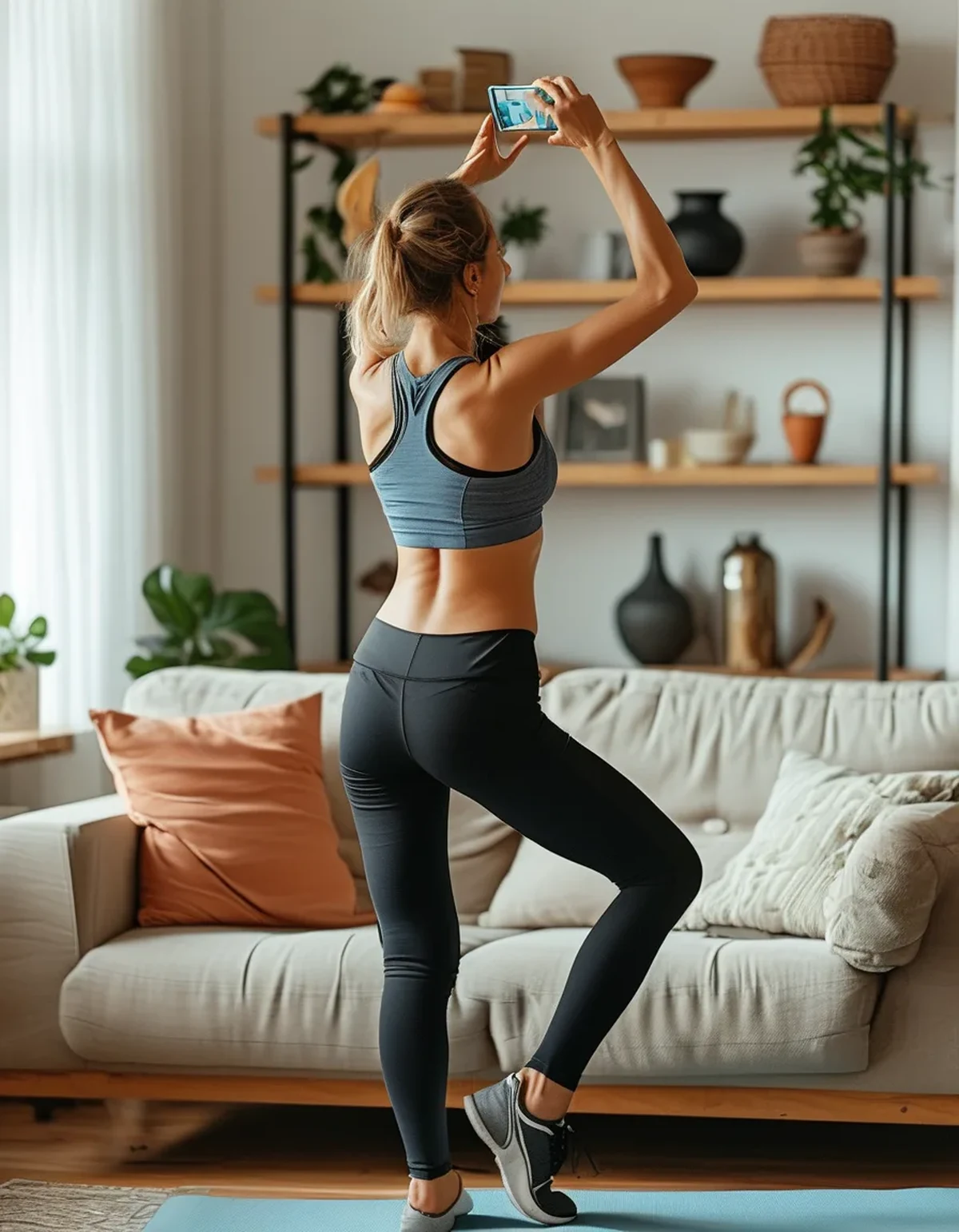
How to check in ten seconds: watch the instructor’s hands during a simple one-arm move. If they say right arm and raise the arm on the same side of the screen as your right hand, the video is mirrored and you can copy directly. If they raise the arm on the opposite side, it is unmirrored.
If it is unmirrored, stop translating. Just move whichever side matches the image and ignore the verbal cue. For cardio it makes no practical difference which leg leads, and dropping the translation frees up an enormous amount of mental capacity.
Instructors who film from behind solve this entirely, which is why back-facing tutorial segments are so much easier to learn from. If you find one who does this, they are worth more than a more famous instructor who does not.
5 Fixes That Make a Real Difference
1. Get the screen bigger, higher and further away. This is the highest-value change by a wide margin. Cast to a television if you can. Failing that, prop the phone at chest or eye height on a shelf rather than on the floor, and stand further back — counterintuitively, a small screen further away is easier to follow than a small screen close up, because you can take in the whole figure at once instead of scanning it. A cheap tablet stand solves this permanently.
2. Learn the feet first, ignore the arms. Arms carry most of the visual noise and almost none of the cardiovascular benefit. Run the routine once with your hands on your hips and only the footwork. Add arms on the second pass. Almost everyone who says they cannot follow choreography can follow the footwork alone.
3. Watch one full round before moving. Thirty seconds of watching beats two minutes of scrambling. Your brain builds a rough template of the sequence, and the second time through you are recognising rather than reacting. This is how studio classes work too — the instructor marks it before running it.
4. Slow it down. Most video platforms allow playback at 0.75 or 0.5 speed. Learn at 0.75, then run it at full speed once it is familiar. You lose a little of the workout and gain the entire routine. Use the pause button without guilt — nobody is watching.
5. Pick instructors who film from behind or state that they mirror. This single filter changes the experience more than any amount of practice. Look for tutorial segments filmed back-to-camera, verbal cues that match the image, and a camera that stays wide during footwork sections rather than cutting to a close-up. If a channel consistently frustrates you, it may genuinely be the filming rather than you.
How should you actually structure a home session?
Differently from a studio class, because the constraints are different.
Separate learning from training. A studio class blends both because the instructor manages the pace for a room. At home you can, and should, split them: five minutes of learning the sequence slowly, then twenty minutes of moving continuously. Trying to do both simultaneously is why home dance cardio often ends up as neither good learning nor good cardio.
Repeat routines rather than always choosing new ones. The cardiovascular benefit comes from moving continuously, and you cannot move continuously while learning. A routine you know is a better workout than one you are learning, even though the new one feels more productive. Rotate three or four familiar routines and add one new one a week.
Keep moving when you lose the thread. March, step side to side, do anything — just do not stop. The single biggest difference between a home session that works and one that does not is whether the heart rate stays up during the confused bits. Nobody sees you improvise.
Set up your space so you can move backwards. Depth cues are missing on screen, and you will drift. Clear enough floor that drifting is not dangerous, and check what is behind you before you start.
Turn the mirror off if your device shows you. Some apps show a self-view. For learning it is useful; for a workout it splits your attention and it is the single most common reason people report feeling self-conscious in their own living room.
Seasonally, this is when home dance cardio starts mattering again. Outdoor exercise gets harder from here, and dance cardio is one of the few genuinely high-intensity options that works in a small indoor space with no equipment. Getting the setup right now — a proper stand, a couple of routines you know, an instructor whose filming you can follow — pays off across the whole indoor season.
And it does get easier. Following choreography from a screen is a learnable skill in its own right, distinct from dancing. Most people find that after three or four weeks with the same instructor, following becomes almost automatic, because you have learned that particular person’s vocabulary and cueing style. Switching instructors constantly is what keeps it hard.
FAQ: Screen Choreography Questions, Answered
Am I just bad at dancing?
Almost certainly not, if you can follow in person and not on screen. Those are different tasks. In-person following uses peripheral vision and depth perception that a phone screen simply does not provide.
Should I use a mirror at home?
A large mirror helps for learning and technique. For a cardio session it is optional, and for many people it adds self-consciousness without adding benefit. Try both and keep whichever you actually use.
Does watching first really help that much?
Yes, and it is the most underused fix. One viewing before moving converts the first run from reacting to recognising, and recognition is far less demanding than prediction.
What if the instructor never says whether they mirror?
Use the one-arm test — watch which side of the screen their raised arm is on when they say right. Ten seconds tells you, and then you can stop translating.
Is it worth buying a bigger screen?
Casting to a television is the single biggest improvement available. If that is not possible, a tablet on a stand at chest height is a large step up from a phone on the floor, and a stand costs very little.
How long until following gets easier?
Usually three or four weeks with the same instructor, because you are learning their specific cueing vocabulary as much as the moves. Sticking with one channel for a month is a real accelerant.
TL;DR:
- A small screen removes peripheral vision and depth cues — the two things that make choreography followable.
- Check whether the video is mirrored with the one-arm test. If it is not, stop translating and just copy the image.
- Bigger, higher, further away. Casting to a television is the single biggest improvement.
- Learn the footwork first, add arms second, and watch one full round before moving.
- Repeat routines you know for the actual workout. Learning and training are different sessions.
Stick with one instructor for a month. Most of the difficulty is learning their cueing style, not the moves.
Keep Reading
This article is for general informational and styling purposes only. Fit, sizing, and product availability may vary.