Your Dance Cardio Workout Suddenly Feels Easy — Here's What That Actually Means
That routine used to leave you gasping by song two, and now you’re barely breaking a sweat halfway through — that’s not boredom, it’s your cardiovascular fitness telling you it’s time to change something.

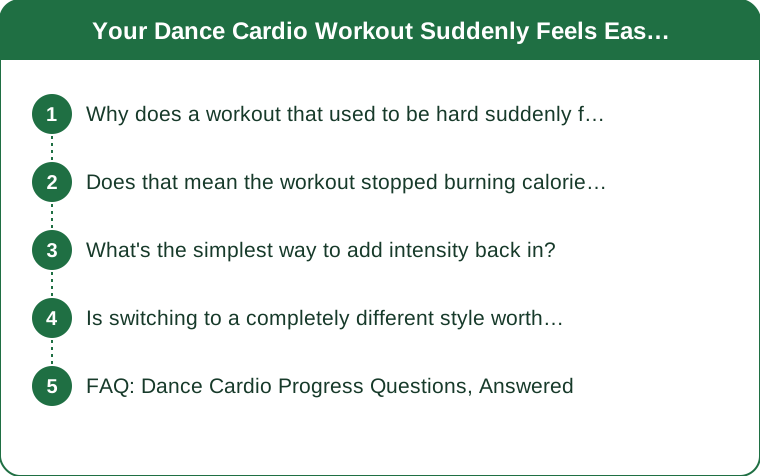
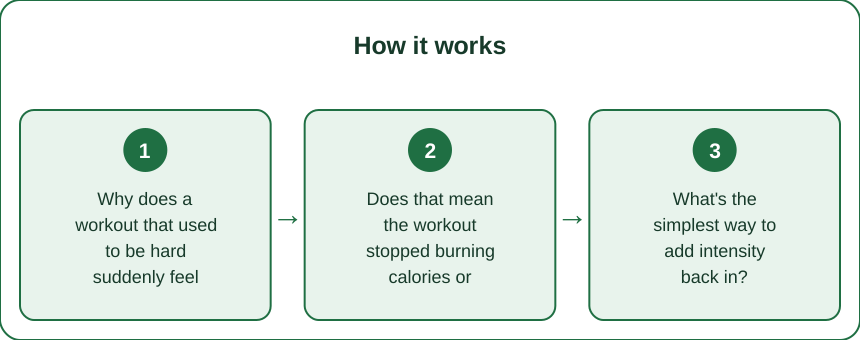
Why does a workout that used to be hard suddenly feel easy?
Your cardiovascular system has genuinely adapted — improved heart efficiency, better oxygen delivery to working muscles, and more efficient movement patterns from repetition all combine to make the same routine measurably less taxing than it was weeks ago. This is a sign of real progress, not a sign the workout stopped working entirely.
Does that mean the workout stopped burning calories or improving fitness?
Not entirely, but its relative intensity has dropped, meaning you’re likely getting less cardiovascular benefit at the same heart rate zone than you were initially — the workout still has value, but it’s no longer providing the same challenge-driven adaptation stimulus it once did.

What’s the simplest way to add intensity back in?
Increase range of motion, add resistance (light hand weights), or increase tempo/choreography complexity — any of these raises the metabolic and coordination demand without needing an entirely new routine. Complexity specifically also challenges coordination in a way pure intensity increases don’t.
Is switching to a completely different style worth considering?
Yes, periodically — rotating between dance styles (Latin-inspired, hip-hop-based, cardio-barre-hybrid) challenges different movement patterns and muscle recruitment than sticking with one style indefinitely, which both prevents plateau and reduces overuse patterns from repeating identical movements.
FAQ: Dance Cardio Progress Questions, Answered
How do you know if a dance cardio routine is still challenging enough?
A useful check is perceived exertion — if you can hold a full conversation comfortably throughout, the intensity has likely dropped below an effective cardiovascular training zone for most goals.
Should you increase workout length instead of intensity?
Either works, but intensity increases are generally more time-efficient — adding 20 minutes to an already-easy routine produces less benefit than making the existing time more challenging.
How often should you rotate dance cardio styles to avoid plateau?
Rotating every 4-6 weeks is a reasonable general guideline, though there’s no strict rule — the signal to rotate is exactly this ‘feels easy now’ moment.
TL;DR:
- A routine feeling easier is a real sign of cardiovascular adaptation, not a sign it stopped working
- Its relative intensity and benefit at your current fitness level has genuinely dropped, though
- Adding resistance, range of motion, or choreography complexity restores the challenge
- Rotating dance styles every 4-6 weeks prevents both plateau and repetitive movement patterns
Feeling like it got easier isn’t a plateau to worry about — it’s your fitness handing you the cue to turn the dial up.
Keep Reading
This article is for general informational and styling purposes only. Fit, sizing, and product availability may vary.